Quanzhou CITY BOARD

Quanzhou 泉州

The Song-Yuan emporium where the world's religions shared one street

Introduction

A thousand years ago Quanzhou was one of the largest ports on earth — Arab, Persian, Indian and Southeast Asian merchants traded here, and left behind a mosque, Hindu carvings, Manichaean shrines and the tallest pair of stone pagodas in China. The whole old town is a 2021 UNESCO World Heritage listing ('Quanzhou: Emporium of the World in Song-Yuan China', 22 sites), and almost none of it charges admission. Come for a slow two days: incense and oyster-shell lanes by day, noodle soup and puppet theatre by night.

Travel highlights

A whole port city on the UNESCO list

The 2021 inscription 'Quanzhou: Emporium of the World in Song-Yuan China' covers 22 sites across the city — temples, bridges, docks and tombs from the centuries when this was one of the largest ports on earth. Almost none of them charge admission.

One street, three faiths

Tumen Street packs a 1009 Arab mosque, a porcelain-mosaic Guan Yu temple and the Confucian temple into a few hundred metres — the physical receipt of the city's cosmopolitan centuries.

The flower-headdress village

Xunpu's fishing women have worn crowns of fresh flowers for centuries. The village of oyster-shell houses is free to wander, and the full dress-up experience costs about ¥40–80.

Minnan food at the source

Mianxianhu for breakfast, ginger duck for lunch, vinegar pork and tusun jelly in between — Quanzhou is the Minnan kitchen that Xiamen and Taiwan inherited.

Travel alerts

Top attractions

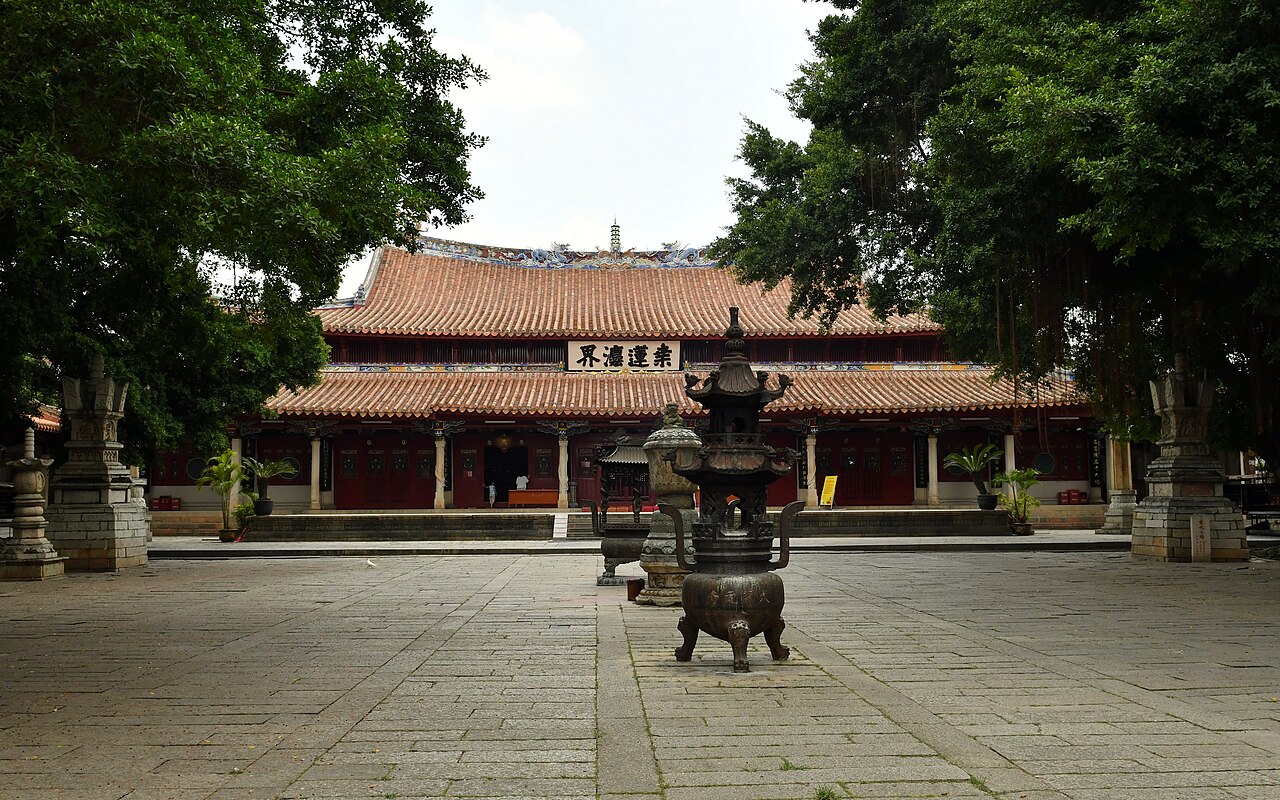
The main hall of Kaiyuan Temple behind a bronze incense burner

Kaiyuan Temple & West Street

Fujian's largest Buddhist temple (686 AD) and the city's living room. The twin stone pagodas — over 40 m, the tallest Song stone pagodas in China — survived a magnitude-8 earthquake; the main hall's pillars carry Hindu carvings left by Indian merchants. Free, open roughly 6:30–17:15. Step out the front gate onto West Street, the old arcade lane of snack stalls and rooftop cafes facing the pagodas.

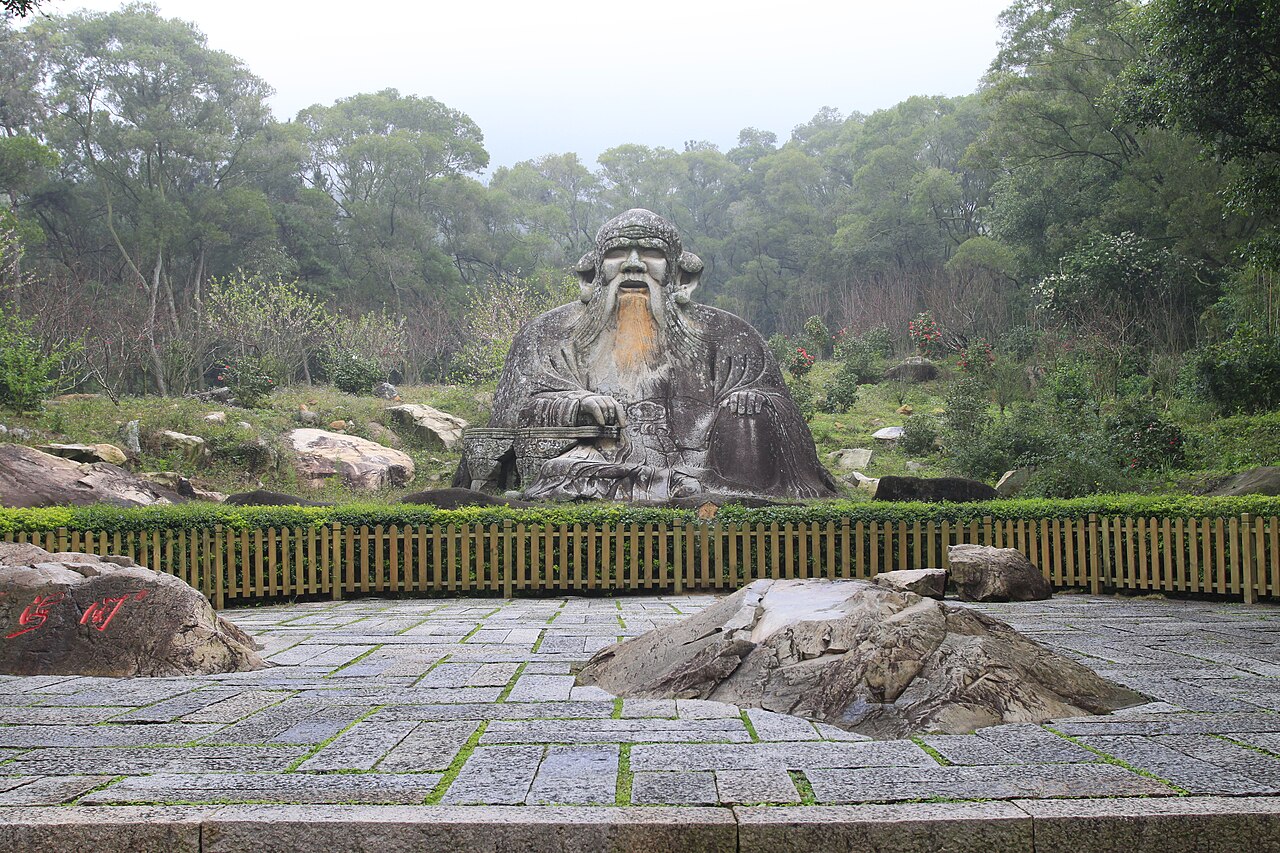
The giant Song-dynasty stone Laozi of Laojun Rock under the trees

Qingyuan Mountain & Laojun Rock

The city's 5A mountain park, ¥70 (free over 60, any nationality, with passport). The must-see is at the foot: Laojun Rock, the largest Song-dynasty stone carving of Laozi in China, smiling under the trees. Climb higher for the view over the old town's red roofs; go early to beat the heat. Sightseeing shuttle inside ¥15 a ride.

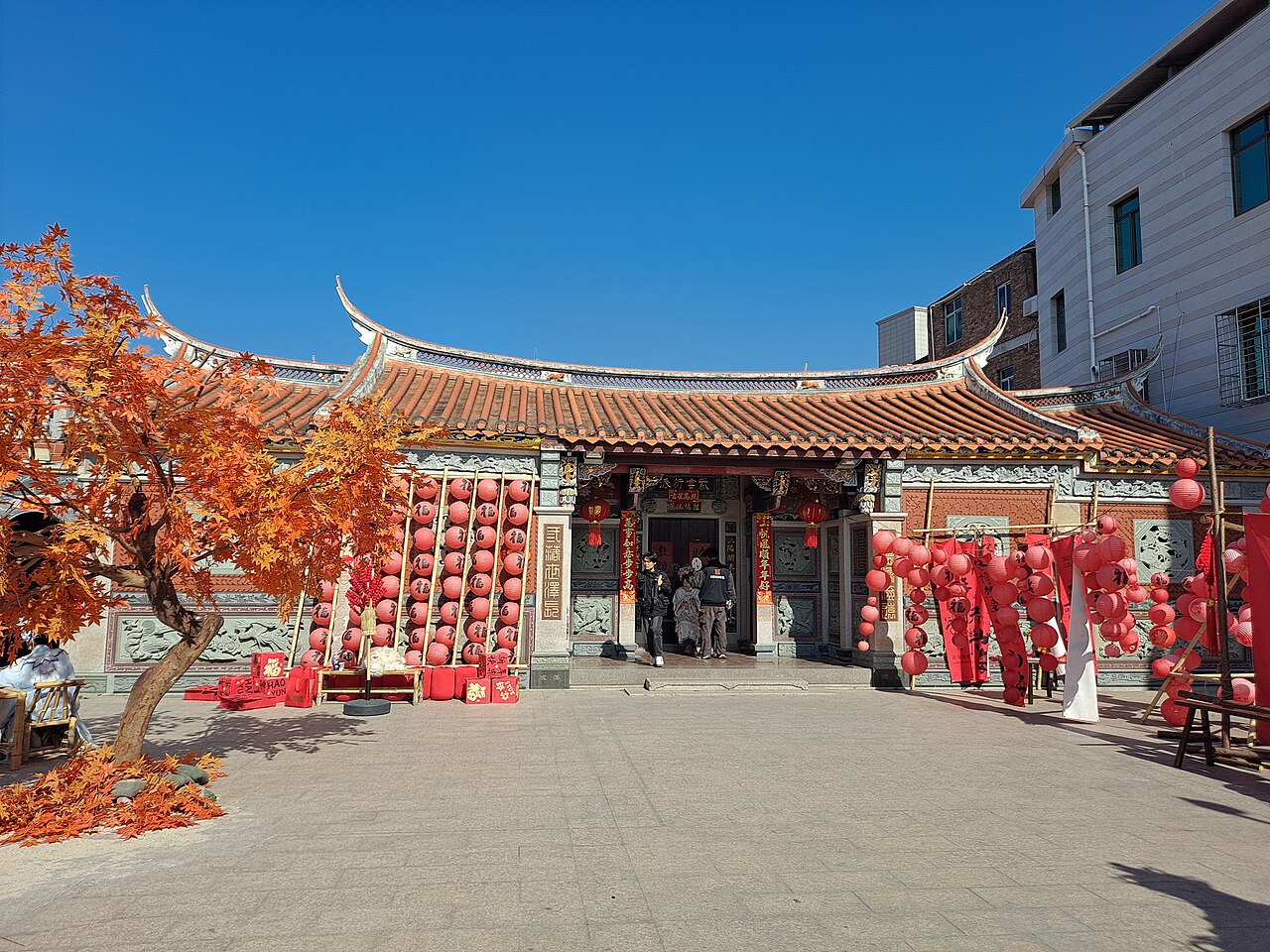
A temple in Xunpu village hung with red lanterns and festival decorations

Xunpu fishing village

A working fishing village 20 minutes east where the houses are walled in oyster shells and the women wear fresh-flower headdresses — the 'garden on the head' that took over Chinese social media. Free to wander; the full flower-and-costume experience runs about ¥40–80 (agree the total before you sit down). Best after 15:00 for soft light on the shell walls and the mudflat boats.

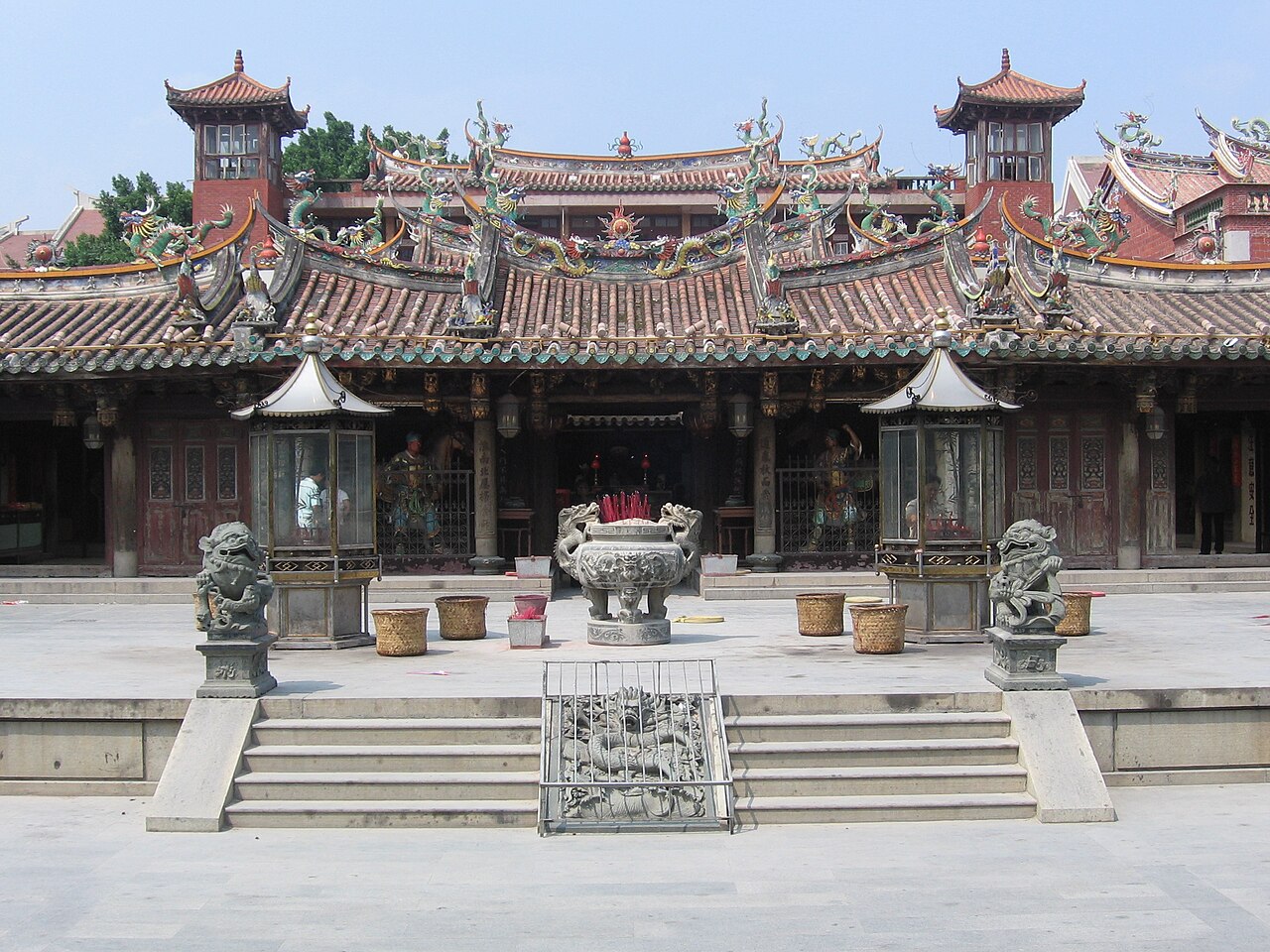
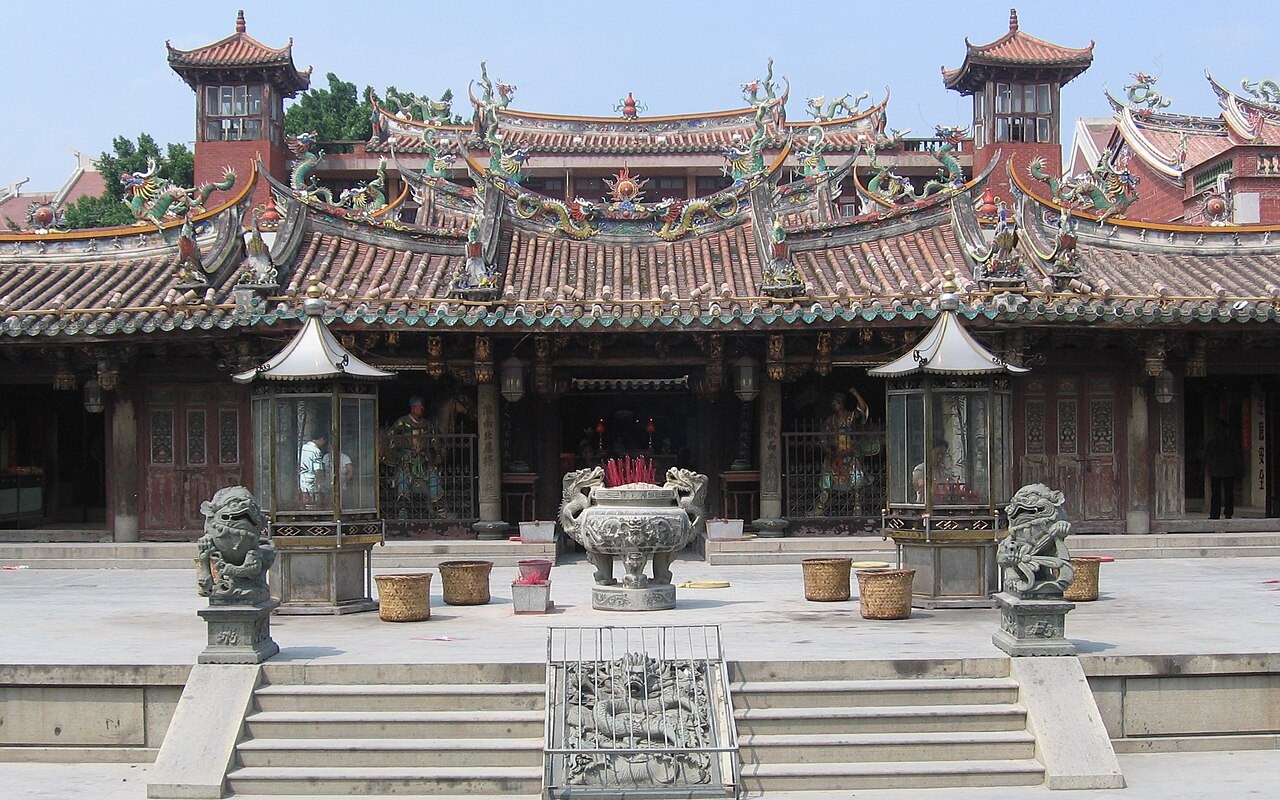
The porcelain-mosaic roof of Guanyue Temple above the incense burners

Guanyue Temple on Tumen Street

The most ornate temple roof in Fujian — dragons, phoenixes and opera scenes in cut-porcelain mosaic, glowing over a sea of incense coils. Guan Yu and Yue Fei share the altar, worshippers queue for fortune sticks, and the whole spectacle is free. Come back after dark when the roof ridges are floodlit.

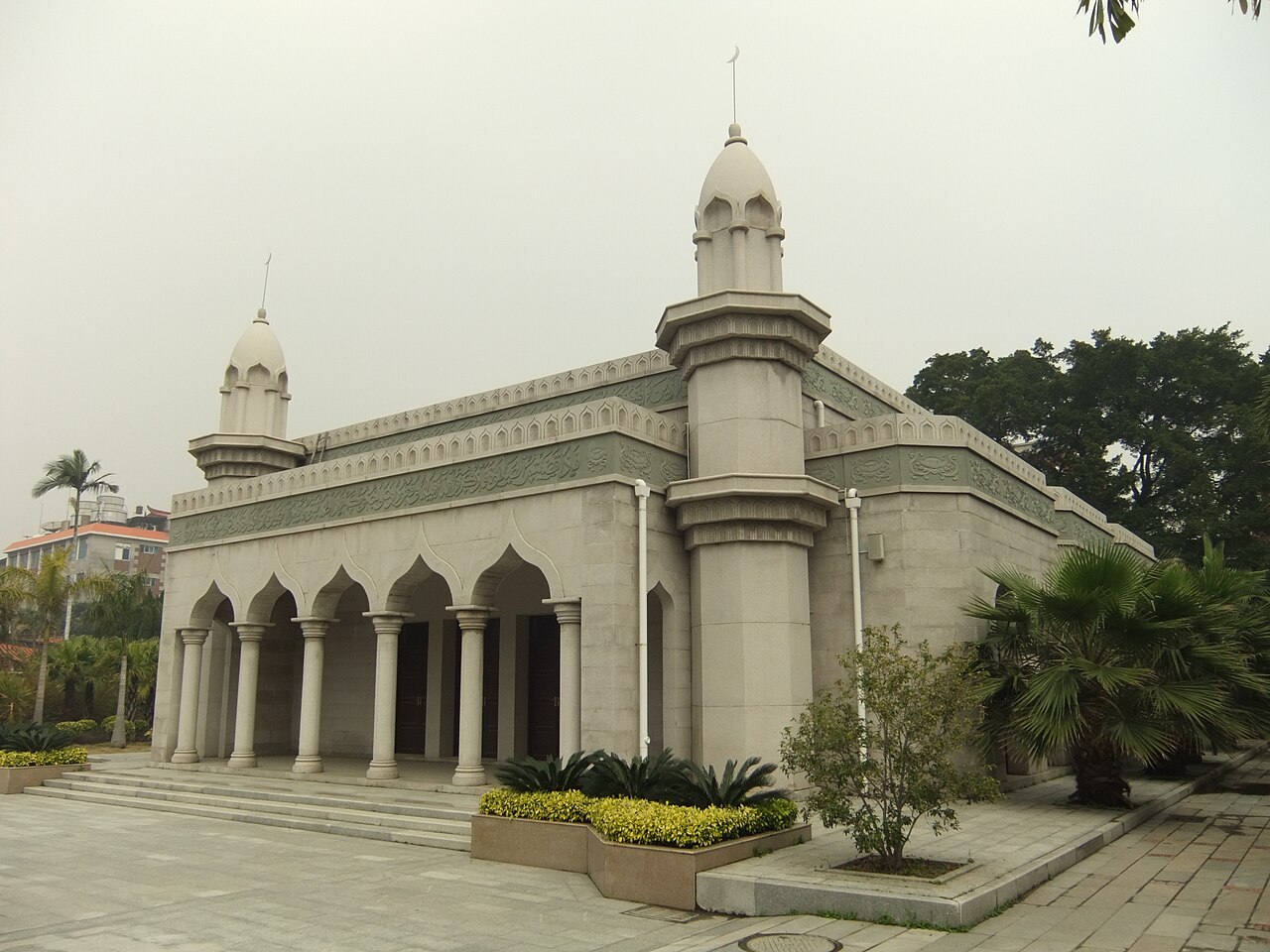
The stone arches and gate of Qingjing Mosque, one of China's oldest mosques

Qingjing Mosque

One of the oldest mosques in China (1009), built by Arab merchants when Quanzhou was the emporium of the East. The surviving stone gate and arched prayer-hall walls are pure Mamluk style standing in a Minnan street. Entry ¥3, 9:00–17:30ish, dress modestly; Friday prayers can limit visiting.

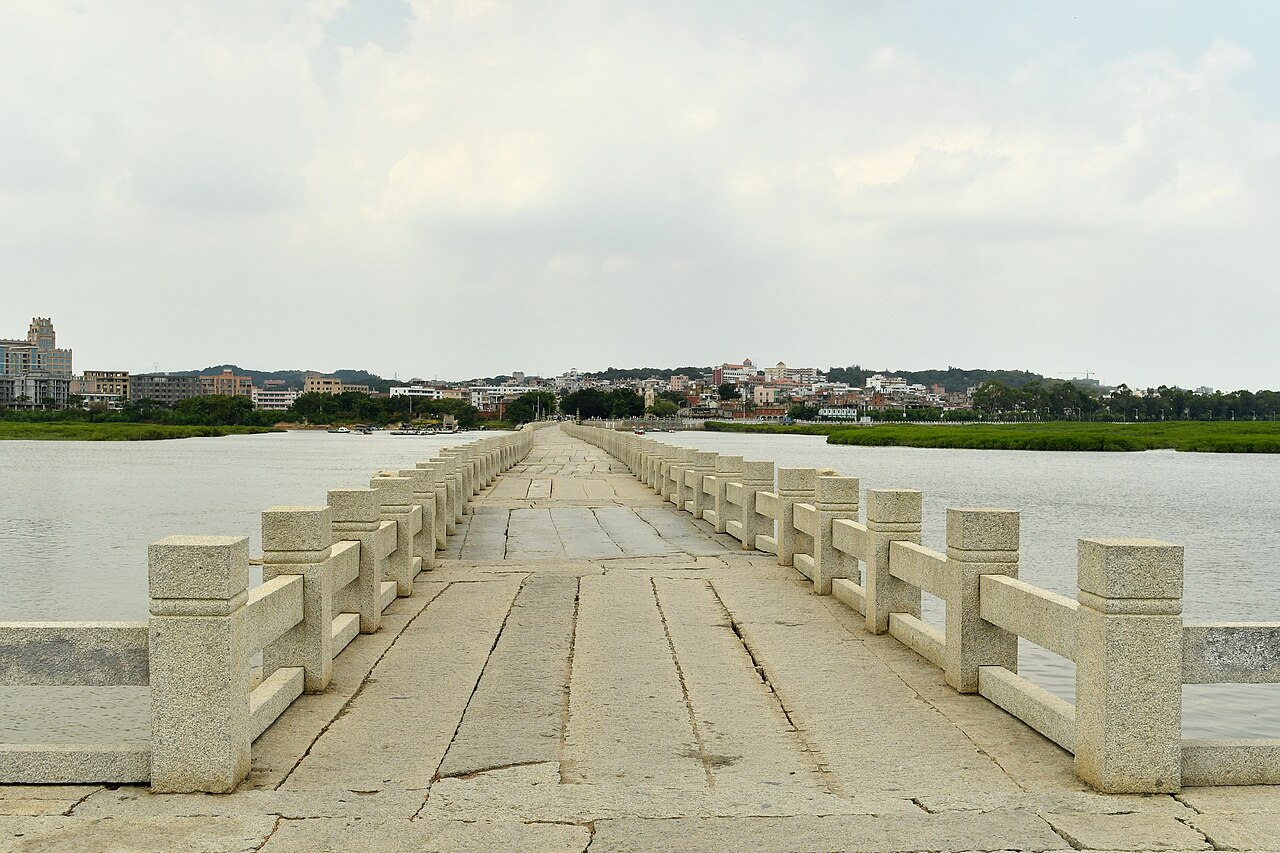
The long stone beams of Luoyang Bridge stretching across the estuary

Luoyang Bridge

The earliest sea-crossing beam bridge in China (1053–1059), engineered with raft foundations and oysters seeded on the piers to cement the stones. Free, always open. Time it for low tide to see the oyster-encrusted piers and egrets on the mudflats; sunset turns the whole estuary gold. About 40 minutes by DiDi from the old town.

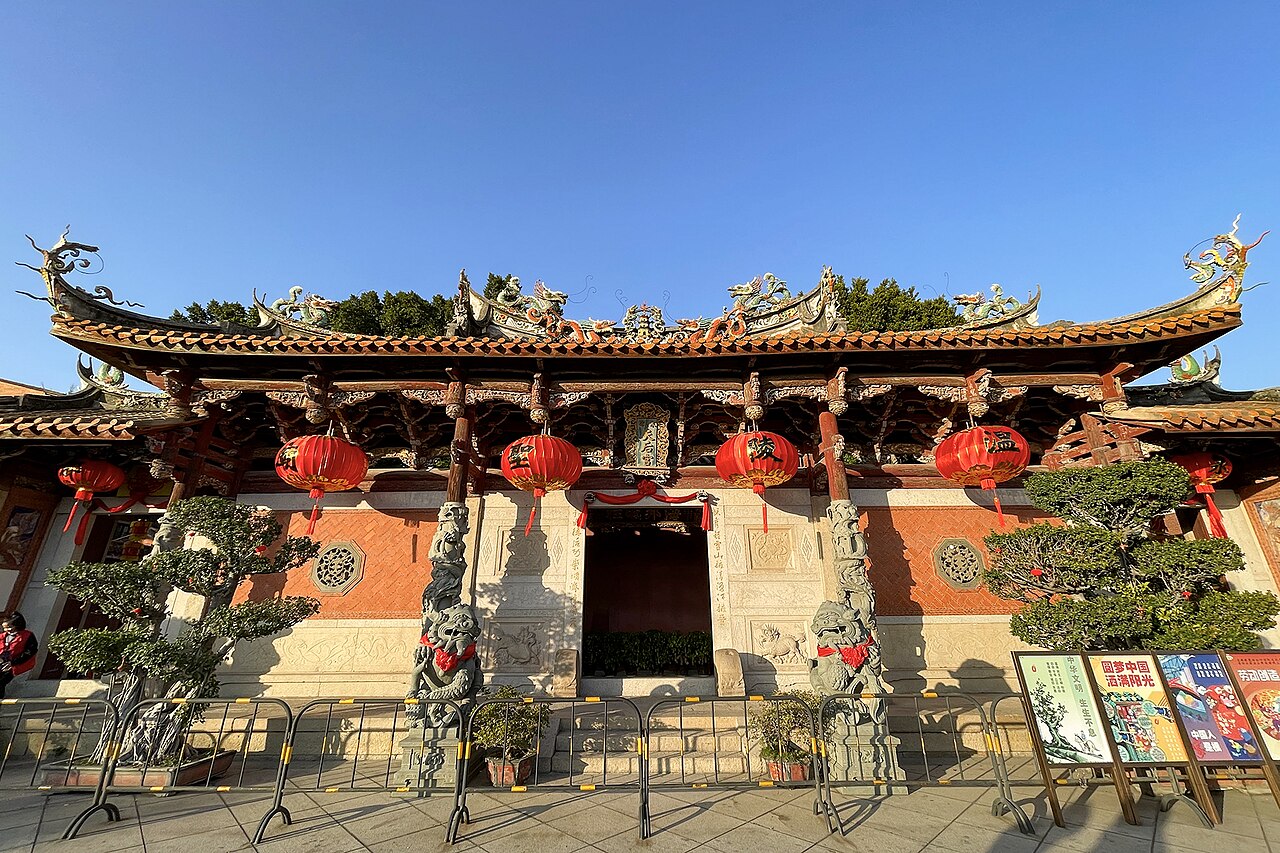
Red lanterns across the carved gate of Quanzhou's Tianhou Palace

Tianhou Palace

The highest-ranking Mazu temple on the mainland — the starting point of the sea goddess's cult that spread across Southeast Asia. Southern Song foundations, swallow-tail ridges and fine stone carving, opposite the ruins of the old city gate (Dejimen). Free, roughly 7:30–17:30.

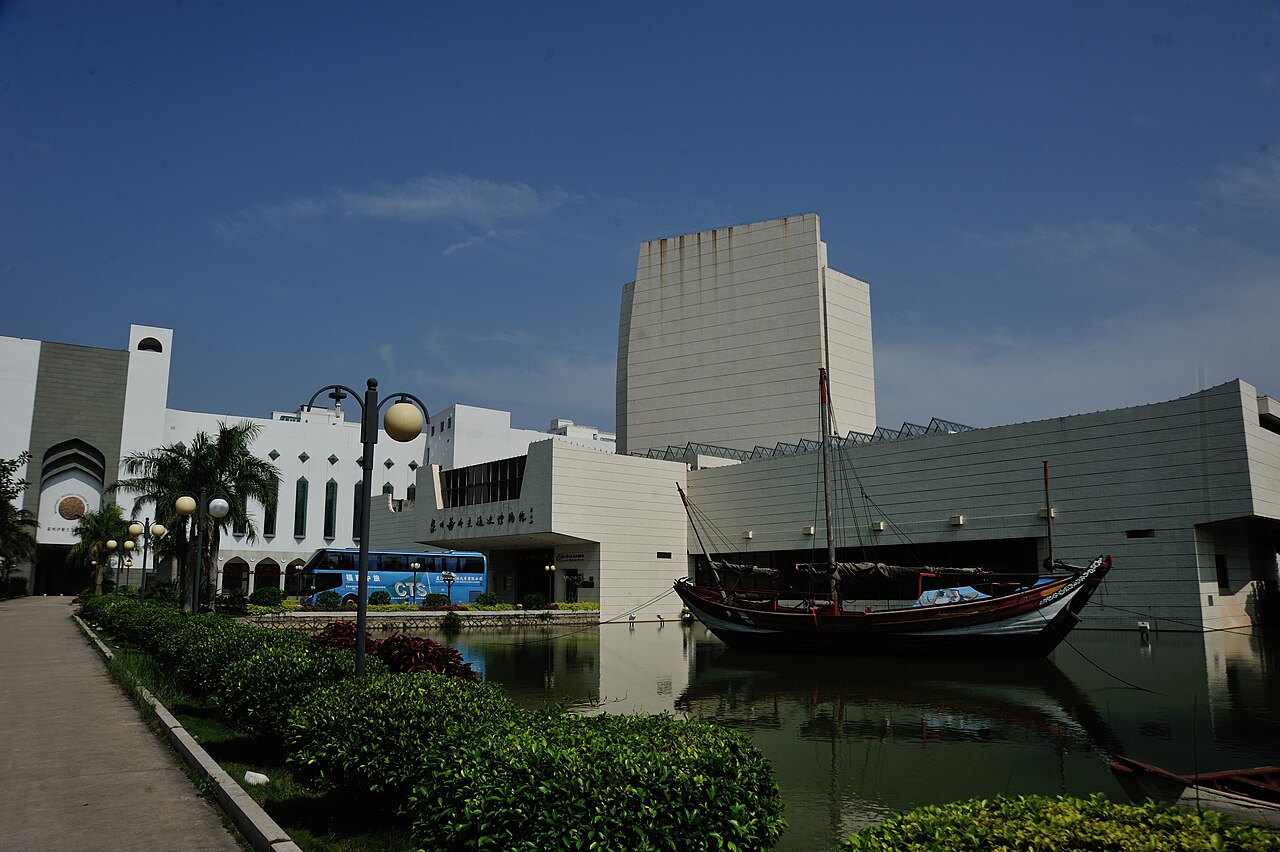
The Maritime Museum's modern halls with a historic ship moored outside

Quanzhou Maritime Museum

The museum that explains everything you just saw: the Song-Yuan port, the ships, and the tombstones of the Arab, Persian and Christian communities who lived here. The religious stone-carving halls are the core — free, 9:00–17:30, closed Mondays except holidays. Give it two hours before or after the old town.

Local cuisine

Where to stay

Stay inside the old town if you can — Quanzhou's magic is the early-morning and late-evening streets, and day-trippers miss both.

Getting around

Getting here

  • Quanzhou Jinjiang Airport (JJN)

    12 km south of the old town, ~25 minutes by taxi (¥30–40). Flights across East and Southeast Asia; a 240-hour transit-free port since December 2024.

  • High-speed rail from Xiamen

    Xiamen North → Quanzhou in 26–32 minutes, ¥25–32 second class, around 100 trains a day. The classic pairing: Xiamen for the coast, Quanzhou for the history.

  • High-speed rail from Fuzhou

    About 1 hour on the coastal line. Quanzhou station (the old one) is closest to the old town; Quanzhou South and East are further out.

Quanzhou has three rail stations — check the exact name on your ticket. The plain 'Quanzhou' station is the one you want for the old town.

Local transport

  • 🚶

    On foot

    The heritage core is one walking loop: Kaiyuan Temple → West Street → Tumen Street → Confucian Temple → Tianhou Palace, all within 2 km.

  • 🚌

    White sightseeing shuttles

    The ¥2 electric shuttles loop the old town's main sights — flag one anywhere in the core.

  • 🚕

    DiDi

    Qingyuan Mountain 15 min, Xunpu village 20 min, Luoyang Bridge ~40 min — all cheap rides from the centre.

Don't drive into the old town: West Street's core blocks are restricted in daytime and parking is a headache. Walk or shuttle inside, DiDi for the outskirts.

Recommended routes

All routes →

FAQs

Is Quanzhou worth it if I'm already going to Xiamen?

Yes — it is the deeper half of the pair. Xiamen has the seaside polish; Quanzhou has a whole Song-Yuan port city on the UNESCO list, mostly free, 30 minutes away by train. Two days here is the best-value add-on in Fujian.

How many days do I need?

Two full days: one for the old-town temple loop on foot, one split between Qingyuan Mountain or Xunpu in the morning and Luoyang Bridge at low-tide sunset. A third day adds the museums and 崇武古城 on the coast.

What is the flower-headdress thing I keep seeing?

The Xunpu women's zanhua wei — a crown of fresh flowers worn by fishing-village women for centuries, now a national trend. In Xunpu village you can dress up for about ¥40–80 including the costume; go after 15:00 for the light.

Is everything really free?

Almost. Kaiyuan Temple, Guanyue Temple, Tianhou Palace, West Street, Xunpu and Luoyang Bridge are all free. The exceptions: Qingyuan Mountain ¥70 (free over 60) and Qingjing Mosque ¥3.

Which train station should I use?

Quanzhou station is the main one and closest to the old town. Quanzhou South and Quanzhou East serve the new coastal high-speed line and are further out — check the station name on your ticket.

Can I visit the mosque as a non-Muslim?

Yes — Qingjing Mosque is a heritage site open to visitors (¥3). Dress modestly, and be aware Friday midday prayers can restrict visiting.

Does the 240-hour transit-free policy work here?

Yes — Quanzhou Jinjiang Airport is one of the 240-hour transit-free ports, and since December 2024 the whole of Fujian is the allowed activity area, so you can combine Quanzhou, Xiamen and Fuzhou on one transit-free stay.