Datong CITY BOARD

Datong 大同

The Northern Wei capital of cave temples, hanging monasteries and Liao-dynasty halls

Introduction

Sixteen hundred years ago Datong was the capital of the Northern Wei dynasty, and the legacy is staggering: the Yungang Grottoes — 51,000 carved Buddhas and one of China's three great cave-temple sites — a monastery bolted to a cliff, the oldest and largest wooden pagoda in the world an hour away, and a walled old town of Liao and Jin dynasty halls that barely charges admission. Two hours from Beijing by high-speed rail, Datong is the single most concentrated hit of early Chinese art and architecture you can add to a trip.

Travel highlights

One of the three great cave temples

The Yungang Grottoes (¥120) are 5th–6th century imperial Buddhism carved into a kilometre of sandstone — 45 major caves, 51,000 statues, and the clearest record of Indian, Central Asian and Chinese art fusing into one style. World Heritage since 2001.

A monastery hanging off a cliff

The Hanging Temple has clung to a Hengshan gorge wall for 1,500 years on beams socketed into the rock — and it shelters Buddhist, Taoist and Confucian shrines under one roof. Entry ¥15, climbing it ¥100 by advance reservation only.

The world's tallest wooden pagoda

The Yingxian Wooden Pagoda (1056) rises 67 m without a single nail — nine centuries of earthquakes survived on joinery alone. An easy hour from Datong, and far less crowded than the grottoes.

Liao and Jin halls in a free walled town

Datong's rebuilt wall (free, bike rental ¥30/hr) rings an old town of genuine 11th–12th century survivors: Huayan Temple's giant Buddha hall, Shanhua Temple's timberwork, and a Ming Nine-Dragon Wall older than Beijing's.

Travel alerts

Top attractions

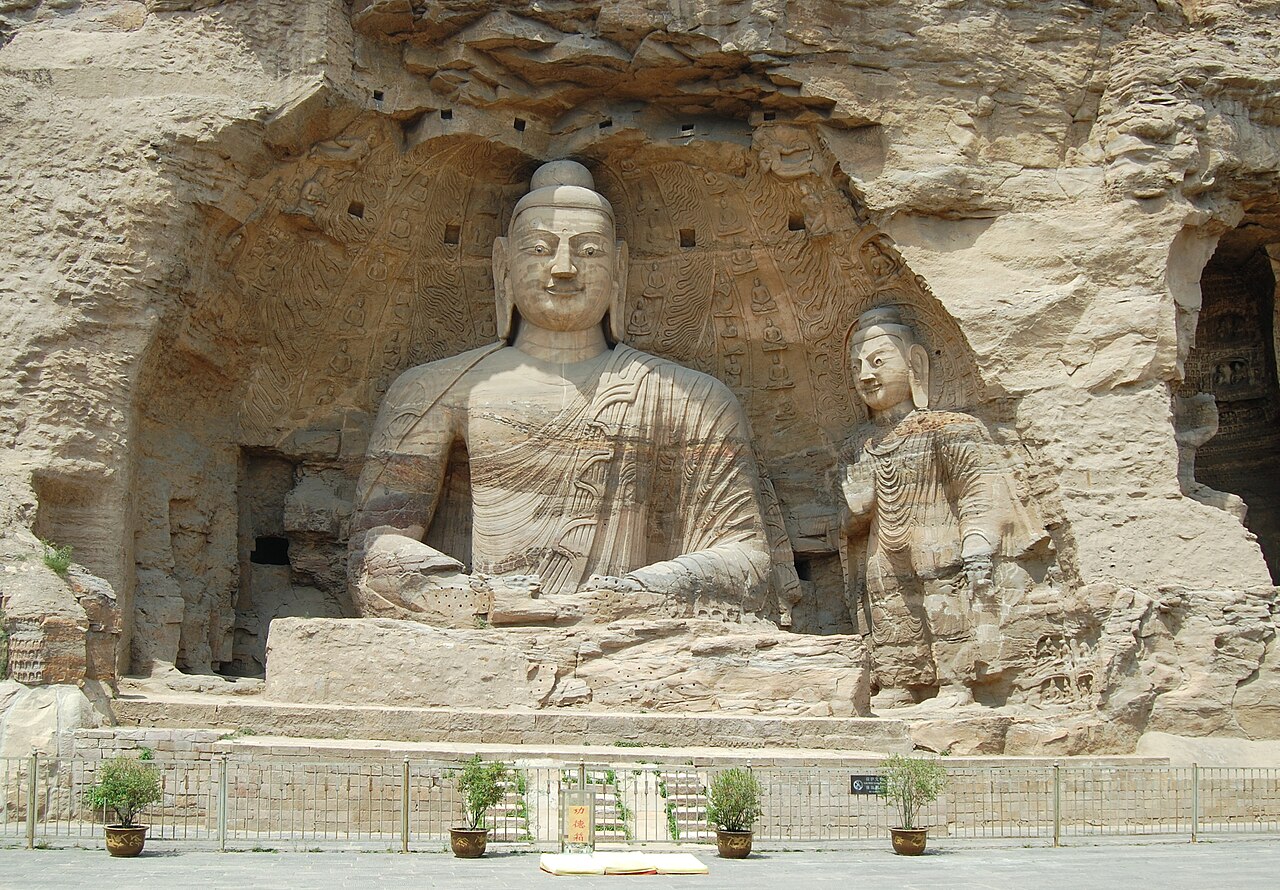
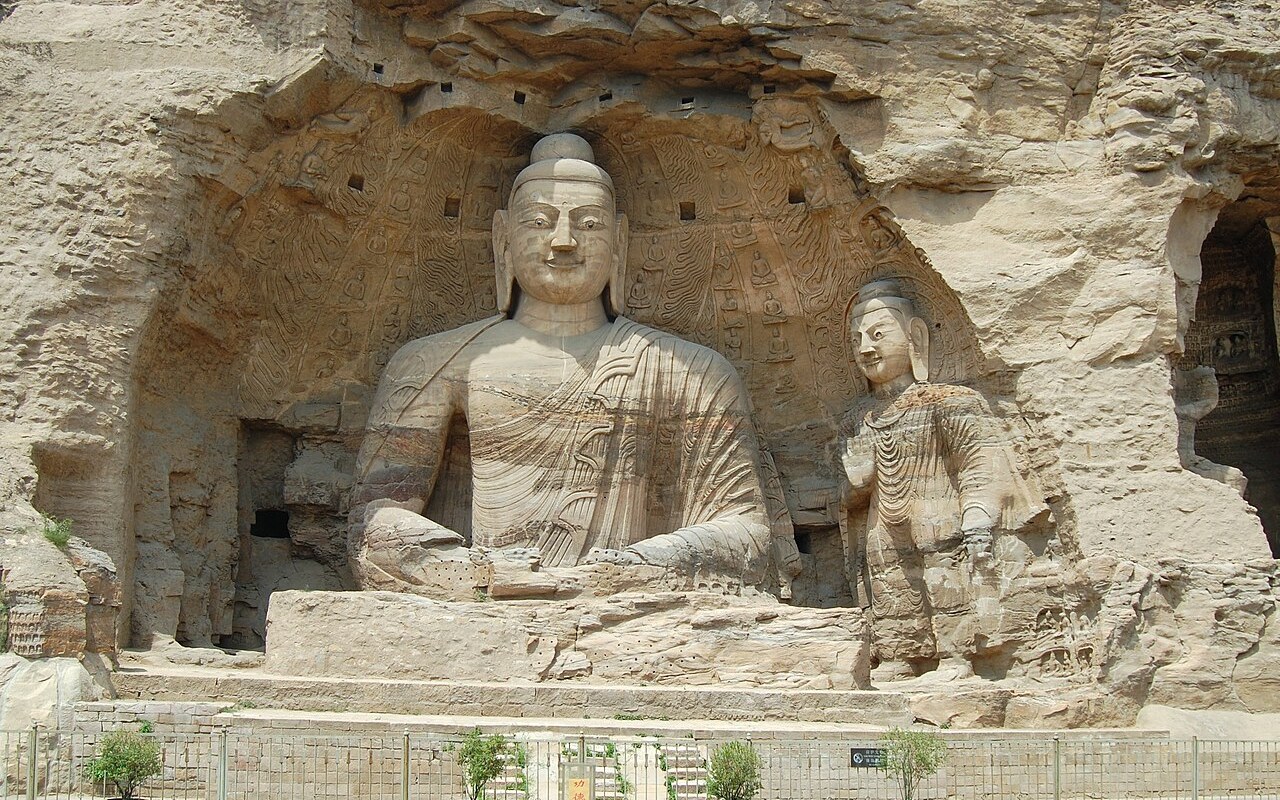
The colossal seated Buddha of Cave 20 at the Yungang Grottoes

Yungang Grottoes

The reason to come. 45 major caves of 5th–6th century Buddhist art — the colossal outdoor Buddha of Cave 20, the painted twin Caves 5–6, and the Tan Yao Five where the style begins. ¥120 (half for students), 7:30–18:00, reserve in the 云冈研究院 mini-program (tickets release 15 days ahead). Go at opening, spend three hours minimum. 40 minutes from town on bus 3 or a ~¥50 taxi.

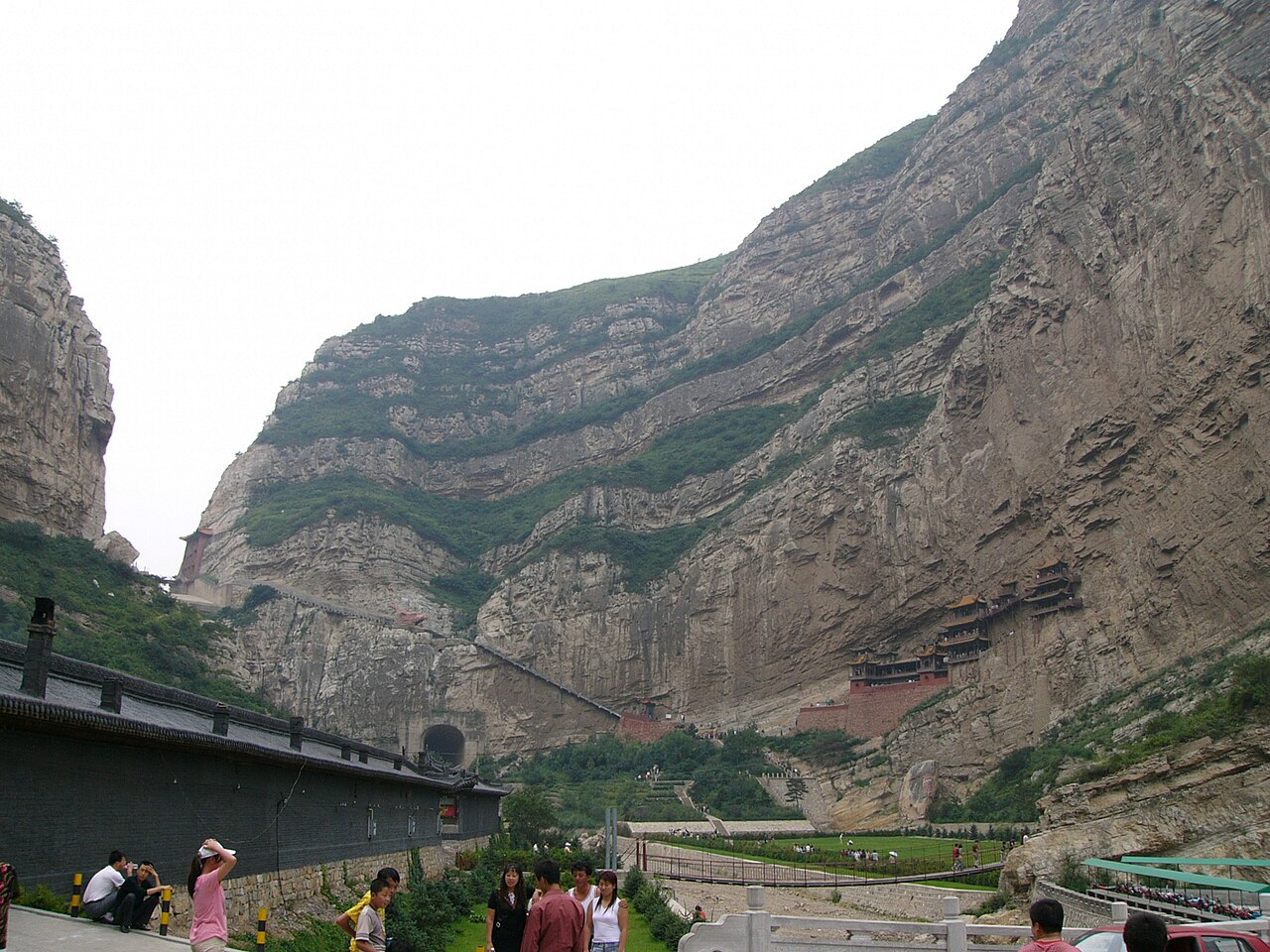
The Hanging Temple clinging to the cliff of the Hengshan gorge

Hanging Temple & Mount Heng

A 1,500-year-old monastery hanging off a gorge wall on beams socketed into the cliff — Buddhist, Taoist and Confucian altars under one roof, the only such trio in China. Park entry ¥15; actually climbing the temple costs ¥100 more and must be reserved days ahead on 山西文旅 (real-name, no on-site sale). 75 km southeast in Hunyuan county; pair it with Mount Heng (¥45), the northernmost of the Five Sacred Mountains, next door.

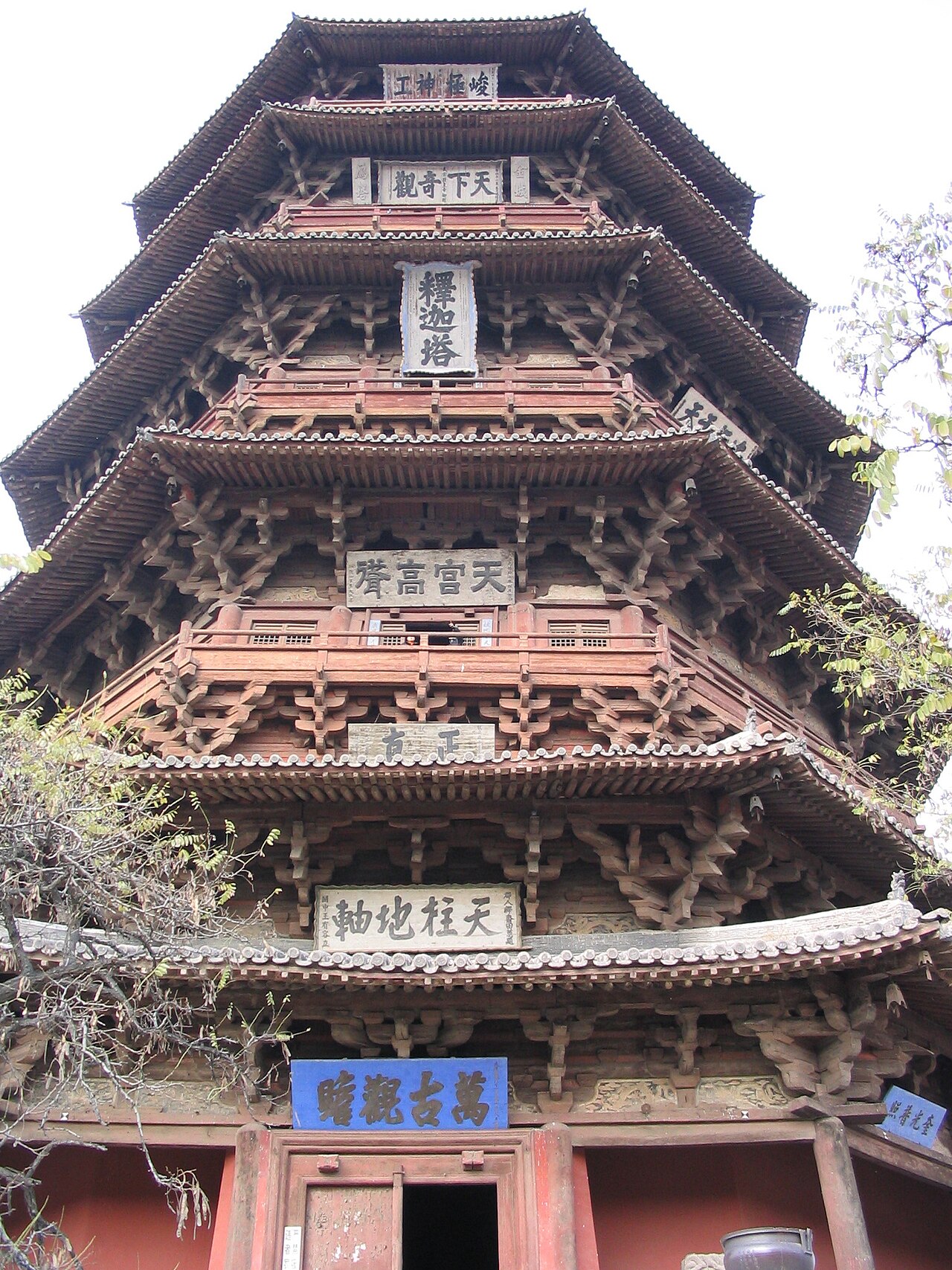
The five-storey Yingxian Wooden Pagoda rising over the temple roofs

Yingxian Wooden Pagoda

The oldest and tallest all-timber pagoda in the world (1056): 67 m of interlocking brackets without a single nail, leaning but unbowed after nine centuries of earthquakes. You can only enter the ground floor now, but the silhouette alone is worth the hour-each-way trip to Ying county. ¥50, 8:30–17:00ish; combine with the Hanging Temple in one charter-car day.

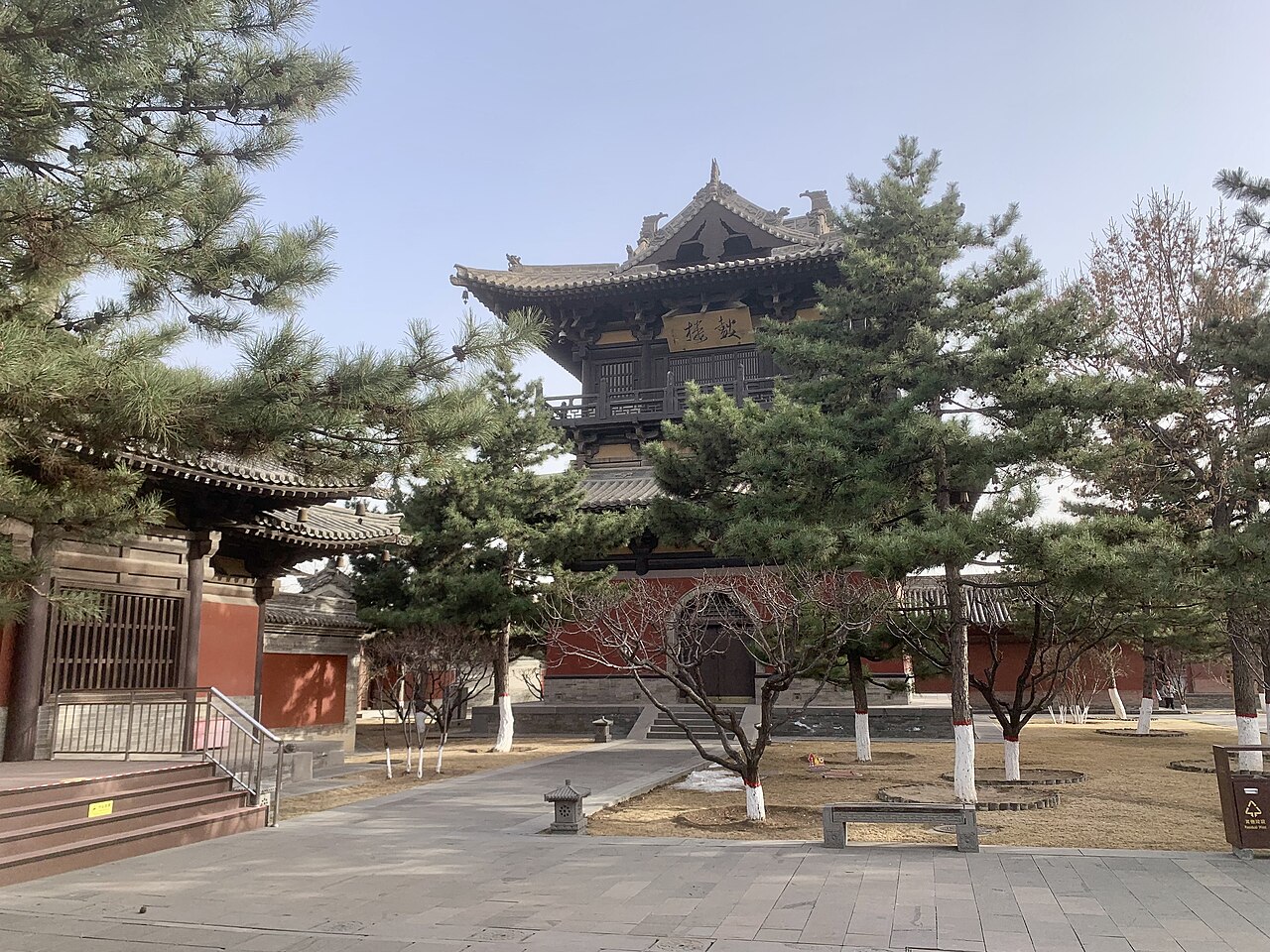
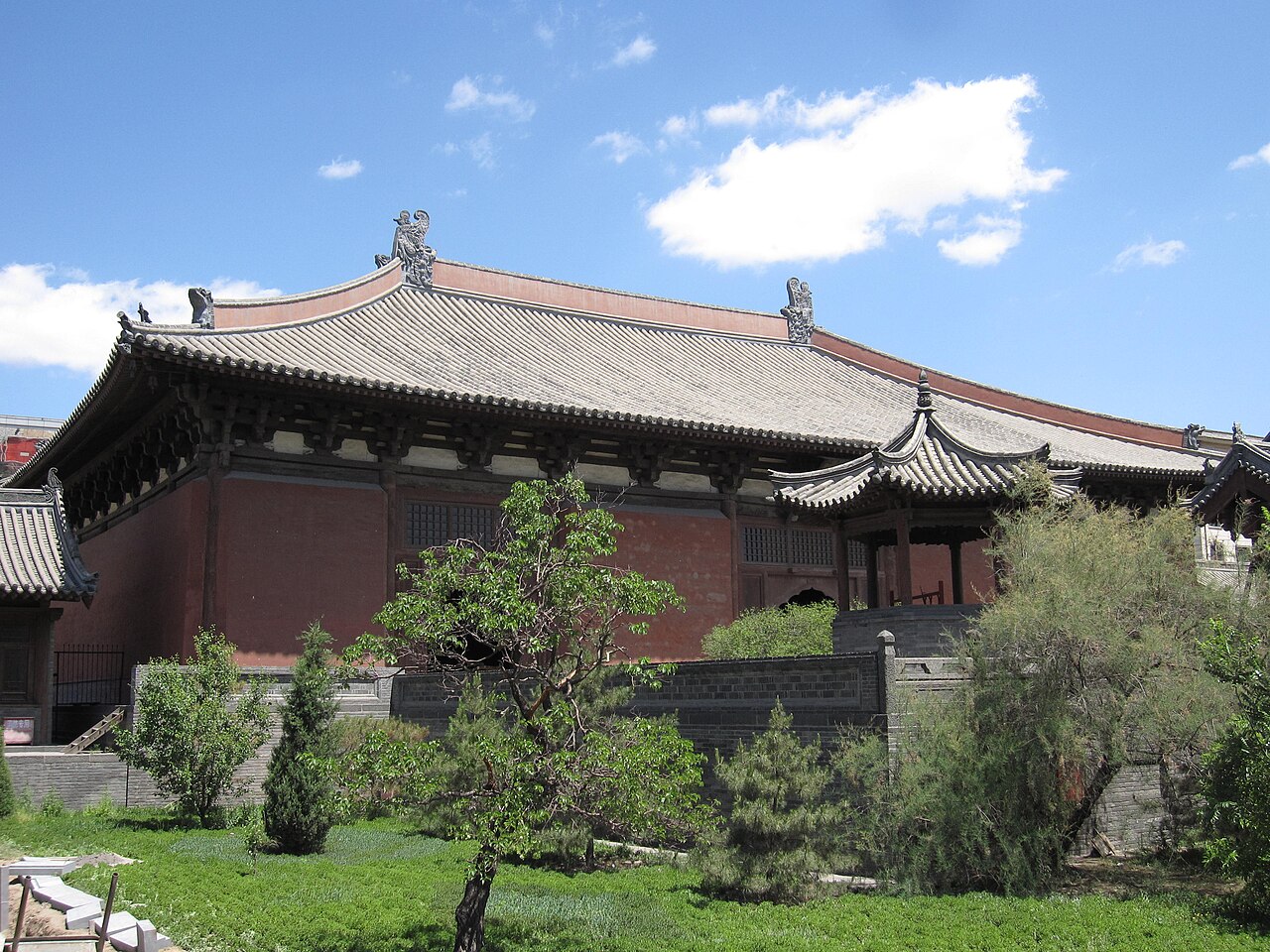
The pine-framed hall of Huayan Temple inside Datong's old town

Huayan Temple

The old town's heavyweight: a Liao-dynasty imperial temple whose Mahavira Hall is one of the largest surviving timber halls in China, and whose scripture library holds the 'Venus of the East' — a Liao bodhisattva with a faint smile. ¥50 (students half), 8:30–17:30, reserve on 大同文旅.

The Jin-dynasty main hall of Shanhua Temple under a summer sky

Shanhua Temple

Quieter and, remarkably, free with an on-site reservation: a courtyard complex whose gate and main hall are original Jin-dynasty timber from the 12th century — among the oldest wooden buildings standing in China. The Five Buddhas inside the main hall and the comic-faced Heavenly Kings at the gate are the details to look for. 8:30–17:00.

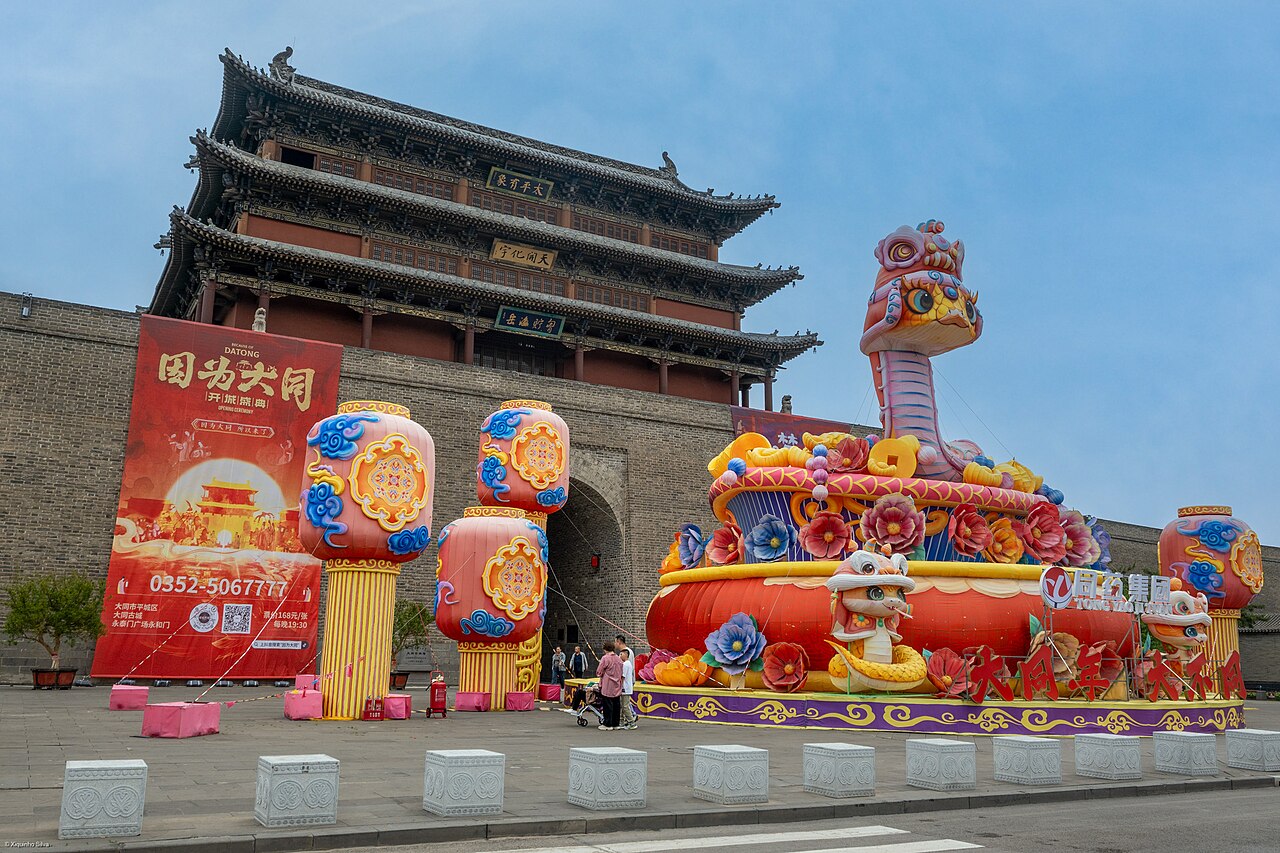
The gate tower of Datong's city wall above the festival street

The city wall & Nine-Dragon Wall

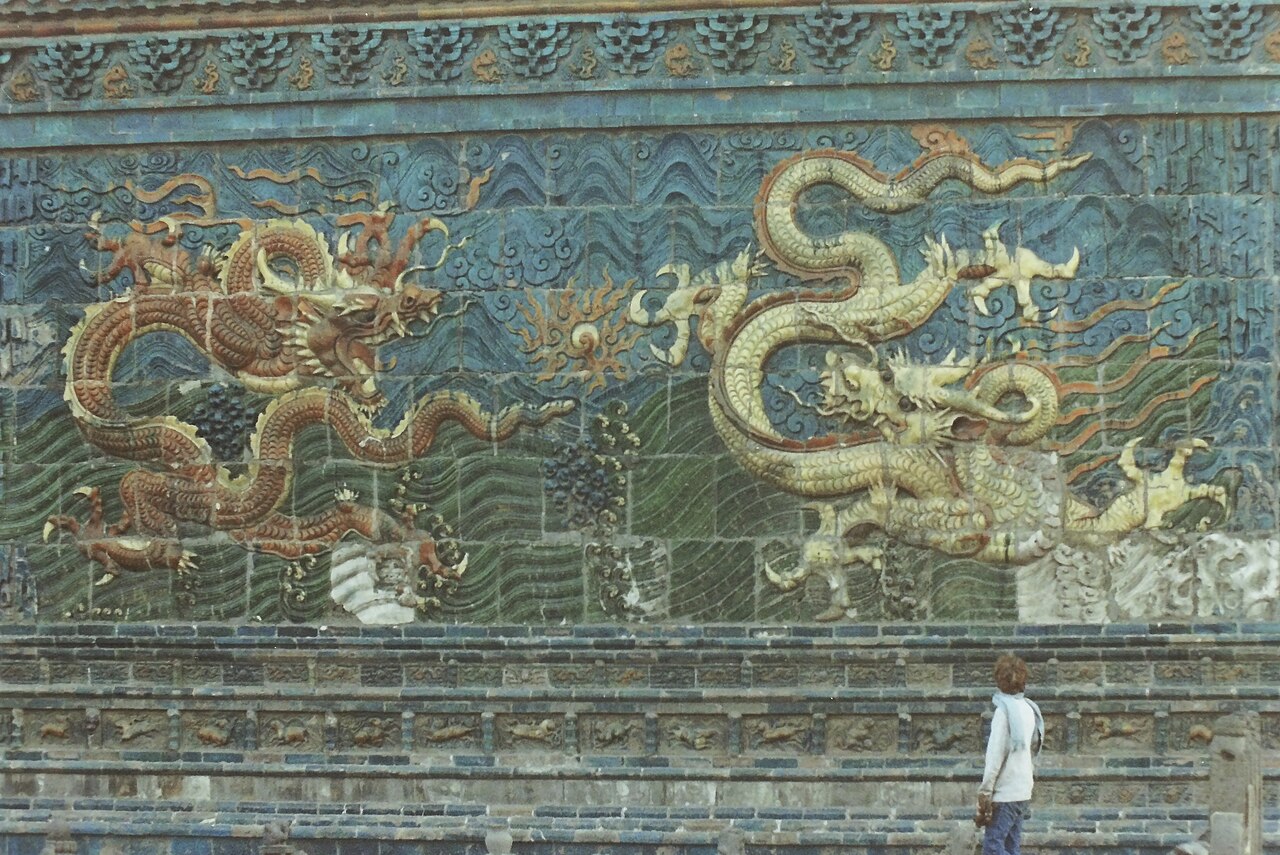
Datong's Ming-era wall, fully rebuilt and free to walk or ride (bikes ¥30/hr, best at dusk when the gates light up). Inside, the Nine-Dragon Wall — 45 m of glazed tile dragons from 1392, a century older and three times larger than the famous one in Beijing's Beihai Park. Free, 8:30–17:00.

Glazed tile dragons on the Ming-dynasty Nine-Dragon Wall

Datong Museum

The air-conditioned midday slot that makes the history click: Northern Wei capital treasures, tomb figurines and the story of the Silk Road's eastern end, in a striking modern building across the river. Free, reserve on the 大同市博物馆公众号, 9:00–17:00, closed Mondays.

Local cuisine

Where to stay

Sleep inside the wall if you can — the old town at dusk, when the gates light up and the food streets fill, is half the Datong experience.

Getting around

Getting here

  • High-speed rail from Beijing

    Beijing North or Qinghe → Datong South in 1 h 46 min–2 h 20 min, ¥146–170 second class, ~50 trains a day. The 大张高铁 makes this the easiest heritage detour from the capital.

  • Datong Yungang Airport (DAT)

    25 km east of town; airport bus to the centre, taxi ~40 minutes. Mostly domestic flights.

  • From Taiyuan

    About 2.5 hours by high-speed rail — the 240-hour transit-free port for Shanxi, with Datong inside the allowed activity area.

Datong South is the high-speed station, 20–30 minutes from the old town by taxi or bus; the old Datong station handles the slow overnight trains.

Local transport

  • 🚶

    Old town on foot

    Huayan Temple, Shanhua Temple, the Nine-Dragon Wall and the wall itself sit inside one walkable ring.

  • 🚌

    Yungang by bus

    Bus 3 runs to the grottoes in about 40 minutes; a taxi is ~¥50 each way.

  • 🚗

    Day trips by charter or tour bus

    Hanging Temple (75 km) and the Wooden Pagoda (75 km the other way) have no direct rail — charter cars (~¥400–600/day) and the old town's tourist shuttle buses are the standard play.

Group the far sights by direction: Hanging Temple + Mount Heng one day (southeast), Wooden Pagoda the same run or separately (southwest) — don't zig-zag.

Recommended routes

All routes →

FAQs

Is Datong worth two full days?

Yes. Day one: Yungang in the morning, the old town (Huayan, Shanhua, Nine-Dragon Wall, the wall at dusk) in the afternoon and evening. Day two: the Hanging Temple and Mount Heng, or the Wooden Pagoda — or all three with a charter car. A third day only if you add the Yingxian pagoda slowly or the earth forest (土林).

Can I do Datong as a day trip from Beijing?

Technically yes — 2 hours each way by high-speed rail — but you'd spend it choosing between Yungang and everything else. One night inside the old town turns a rushed box-tick into the best two days of a northern China trip.

How bad are the crowds compared to other famous sites?

Yungang gets busy at midday but nothing like the Forbidden City. The Hanging Temple's climbing queue is the real constraint — capped and reservation-only. The Wooden Pagoda and Shanhua Temple are genuinely quiet.

What about the Black Myth: Wukong connection?

The game scanned several Datong-area sites — Yungang's caves, the Hanging Temple and the Wooden Pagoda among them — which is why the city is suddenly on younger travellers' maps. The sites themselves need no game knowledge to appreciate.

Is the Hanging Temple climb scary or difficult?

The walkways are narrow and the drop is real, but the route is short, railed and one-way. If heights genuinely unnerve you, the view from below (¥15 entry) still delivers the postcard.

Does the 240-hour transit-free policy cover Datong?

Yes — fly into Taiyuan (TYN): Datong is one of the two Shanxi cities in the allowed activity area, so you can transit-free your way up to the grottoes for up to 10 days.