Chengdu first, because the pandas reward an early start and the city rewards a slow one. Chongqing after, because it makes more sense once you have eaten your way through Sichuan. Ninety minutes of train separates them, and the station on the Chengdu side is Chengdu East.
At a glance
- Day 1Panda Breeding Base → People’s Park
- Day 2Wuhou Shrine → Jinli → Kuanzhai Alley
- Day 3Sanxingdui Museum — or Leshan Giant Buddha
- Day 4Train to Chongqing → Hongya Cave → two-river cruise
- Day 5Liziba monorail → Yangtze cableway → Ciqikou
Day 1
Pandas at opening, tea after lunch
Panda Breeding Base → People’s Park
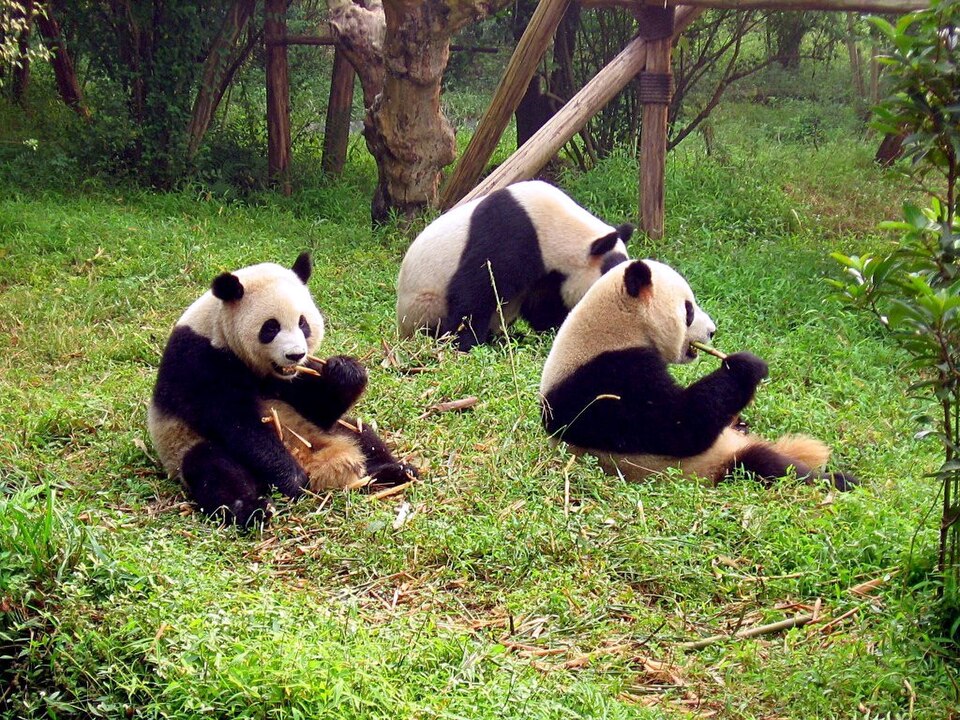
Gates open at 7:30, or 8:00 from November to February, and by ten the pandas have eaten and gone to sleep in a tree, so this is a morning, not a day. Book on the official mini-programme fourteen days ahead — the booking carries a passport number and the gate checks it. Come back into town for a bamboo chair at the Heming teahouse in People’s Park: a lidded cup of jasmine from about ¥15, refilled all afternoon, and ear cleaners working the tables for around ¥30.
 Day 2
Day 2
Three Kingdoms, three lanes
Wuhou Shrine → Jinli → Kuanzhai Alley
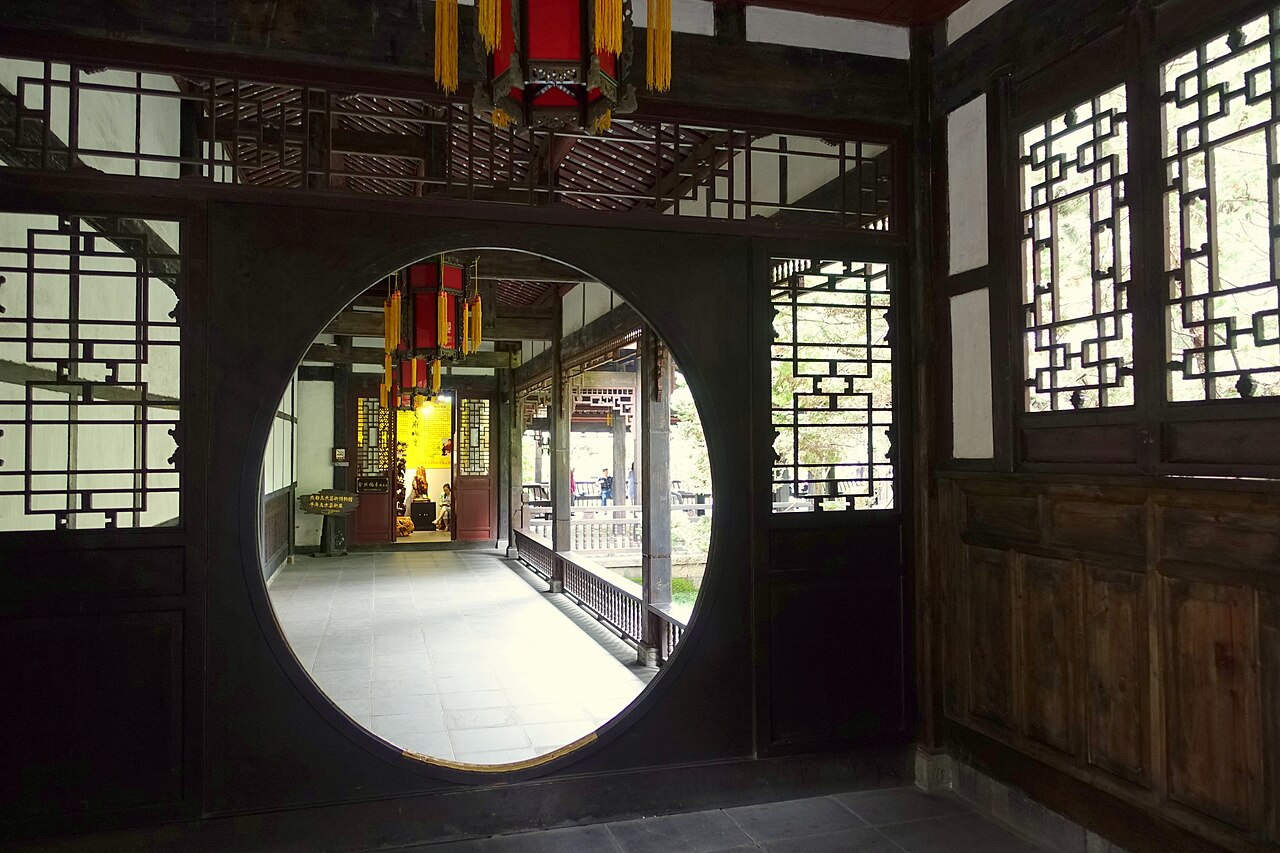
Wuhou Shrine is ¥50, open 8:30 to 18:30 with tickets sold until 17:30, and the red wall and bamboo corridor is the photograph everyone takes. Jinli, the lane beside it, is free and its shops stay open later — treat it as the way out rather than a destination. Kuanzhai Alley is three restored Qing lanes, free to enter and honest about being a shopping street: an hour at dusk with skewers and lanterns, then out before the crowd thickens.
 Day 3
Day 3
Sanxingdui, or the Buddha
Sanxingdui Museum — or Leshan Giant Buddha
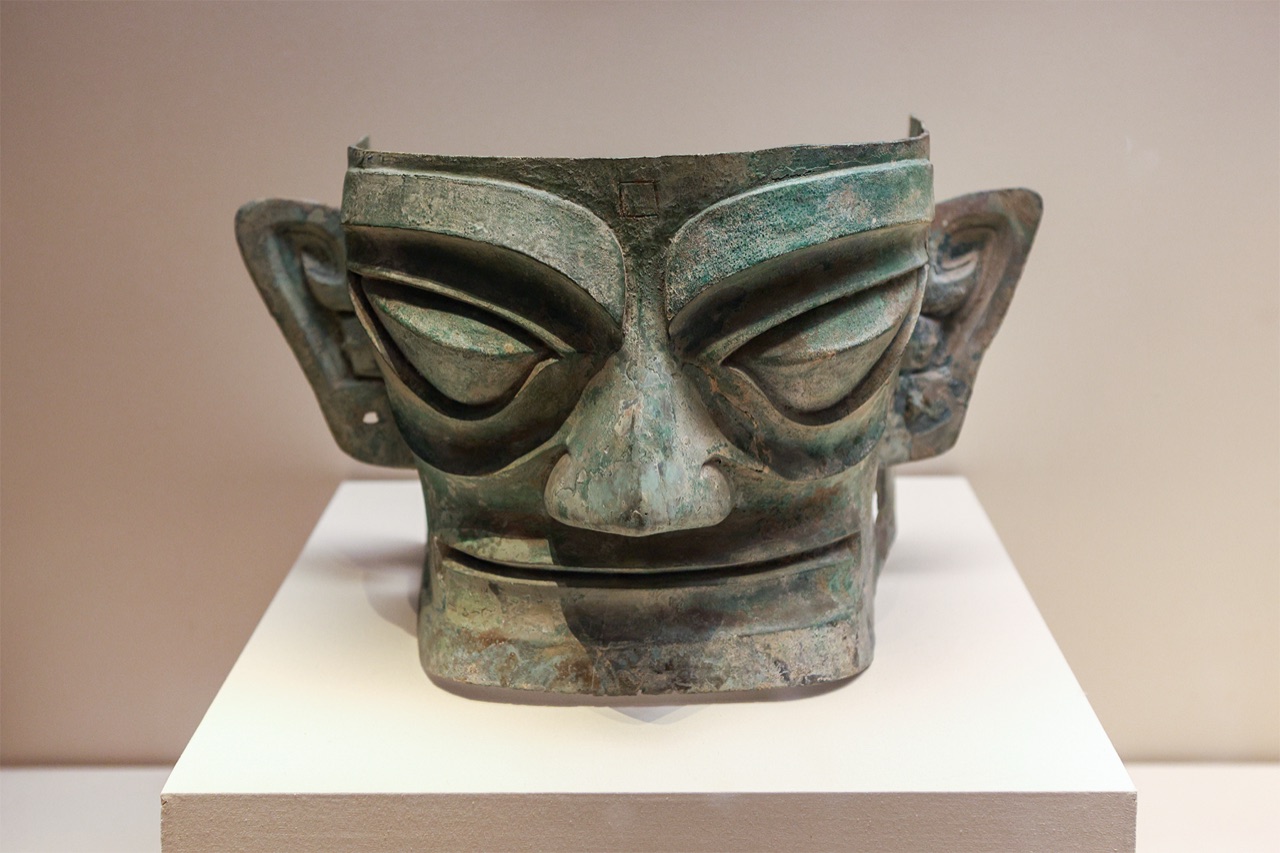
Two day trips in opposite directions, and you pick one. Sanxingdui is bronze nobody knew existed until 1986: a 3.96-metre tree, a standing figure over two metres tall, gold masks and a sceptre, from a city that left no written record. It is an inter-city train from Chengdu East and then a short taxi, and tickets are sold online only, released at 20:00 five days ahead with no desk at the gate. Leshan is about an hour south: ¥54 second class, ¥80 to enter, and the staircase down beside the Buddha is single file.
 Day 4
Day 4
Down to Chongqing, and the cliff that lights up
Train to Chongqing → Hongya Cave → two-river cruise
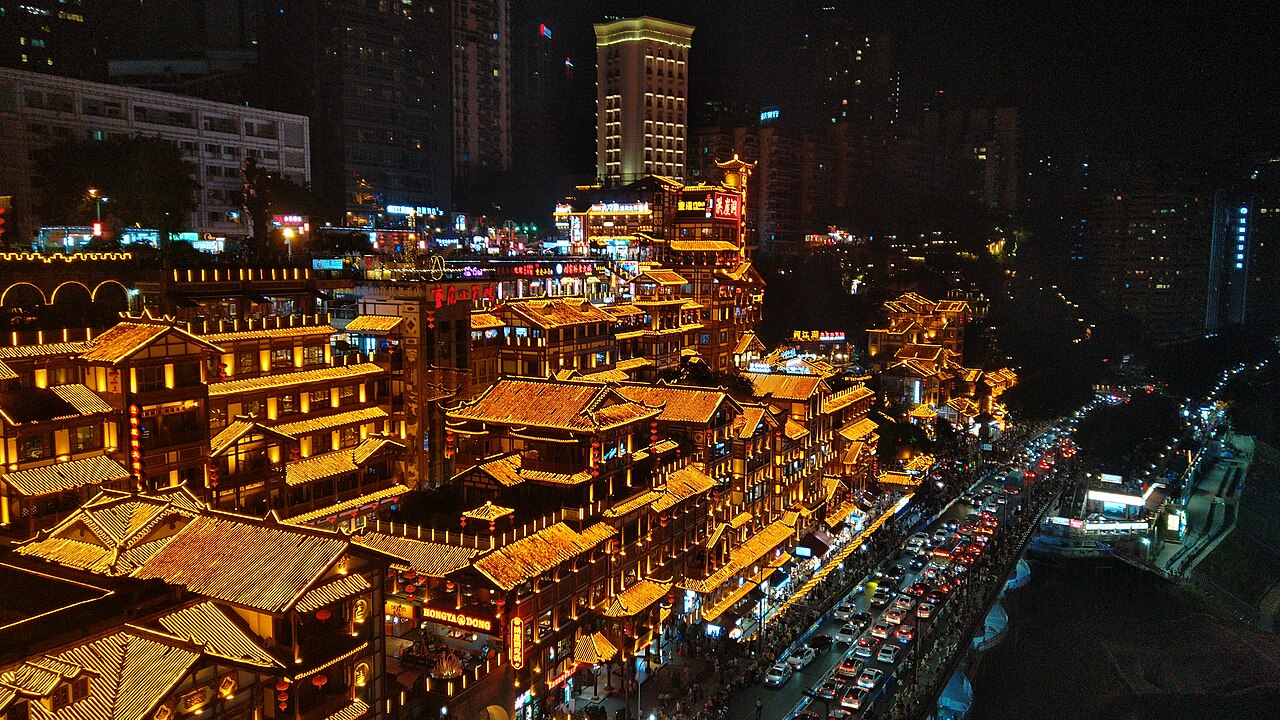
High-speed trains from Chengdu East reach Chongqing in about an hour and a half. Hongya Cave is a cliffside stilt-house complex with a door on one street at the bottom and another ten-odd floors above it — entry is free, though weekends and holidays need a free timed booking. It lights up around seven; the photograph is from Qiansimen Bridge opposite. The two-river cruise leaves Chaotianmen and the Hongyadong dock through the evening, about 45 minutes on the water from roughly ¥140.
 Day 5
Day 5
Through a building, across a river, up a wharf
Liziba monorail → Yangtze cableway → Ciqikou
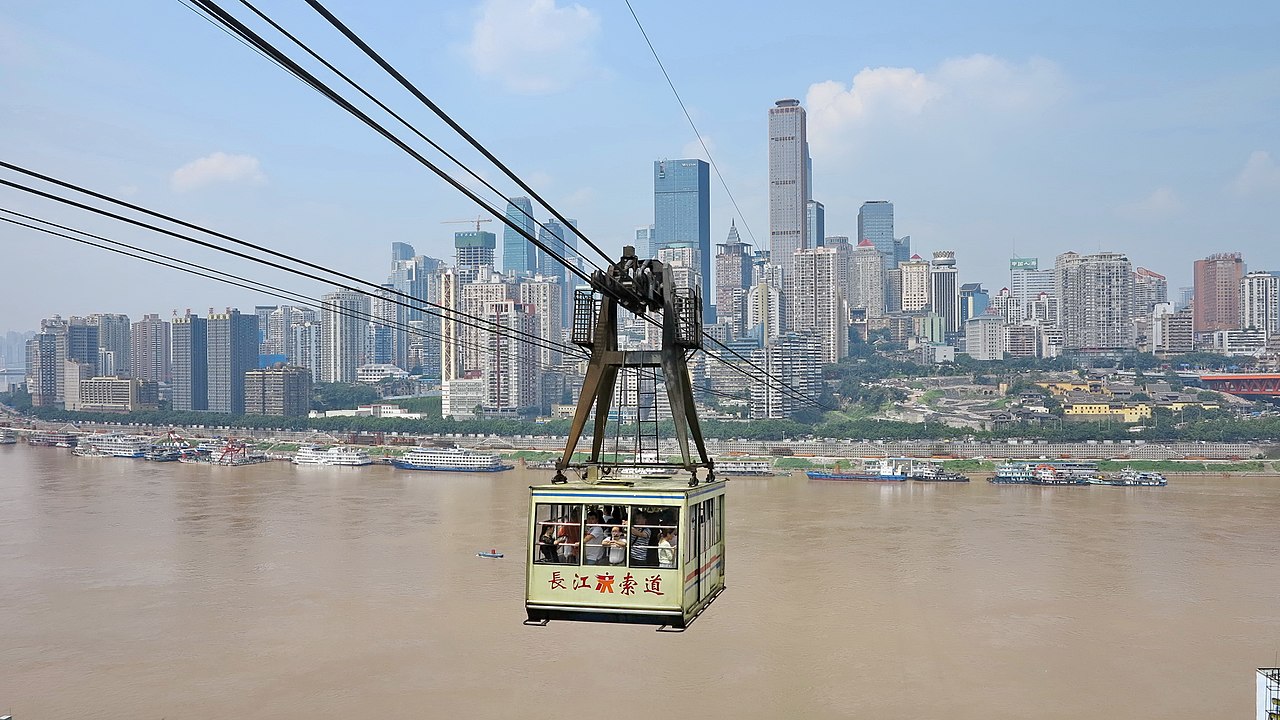
Line 2 trains run in and out of the sixth to eighth floors of a nineteen-storey block at Liziba; riding through costs an ordinary fare and watching costs nothing from the platform beside it. The 1987 cableway crosses 1,166 metres of the Yangtze in under four minutes, ¥30 one way and ¥50 return, and weekend slots sell out hours ahead — buy on the operator’s mini-programme up to two days out. Ciqikou is where maoxuewang was invented; it is thoroughly commercial now, so come before ten or come for the history rather than the shopping.
Eat like you mean it
- Chengdu hotpot and chuanchuanBeef tallow, chilli and Sichuan pepper; chuanchuan is the same thing on skewers, charged by the stick. Ask for mild and it is still hot.
- Chongqing xiaomianBreakfast noodles in chilli oil ordered by weight rather than by bowl. Start with wanza, the pea and minced pork version.
- Mapo tofu, dandan noodles, fuqi feipianThe Chengdu classics. Fuqi feipian means husband-and-wife lung slices and contains no lung.
- Suanla fen and sour-plum drinkSweet potato noodles in a sour, hot broth, usually eaten standing. The smoked-plum drink is the local answer to chilli and works better than beer.
Where to stay
- Chengdu: Chunxi Road or around People’s ParkFirst-timers who want the metro and the tea houses within walking distance.
- Chengdu: near Kuanzhai AlleyQuieter in the evening, and closer to the old lanes than to the shopping.
- Chongqing: Jiefangbei / HongyadongYou want to walk out of the hotel into the lit cliff. Noisiest option.
Before you go
- Book the panda base fourteen days ahead, in the name on the passport you bring — the gate checks it.
- Chongqing navigation needs the floor number, not the street. Allow extra time to find everything on day one.
- Weekend cableway slots sell out hours ahead; book up to two days out on the operator’s mini-programme.
- Leshan’s staircase down beside the Buddha is single file — on a weekend it can take hours.
- Hotpot "mild" is usually still hot. Pace yourself on day one rather than learning this on day three.
One honest thing — The pandas are the one thing here that needs booking before you fly: the base sells tickets online only, in the name on the passport you bring to the gate. Sanxingdui works the same way and releases its tickets at 20:00, five days out. Both cities run on their own chilli, and "mild" in either is hotter than mild anywhere else. One gap worth naming: Dujiangyan, the 2,000-year-old irrigation works an hour from the city and a standard stop on Chengdu itineraries, has no entry on this site yet.