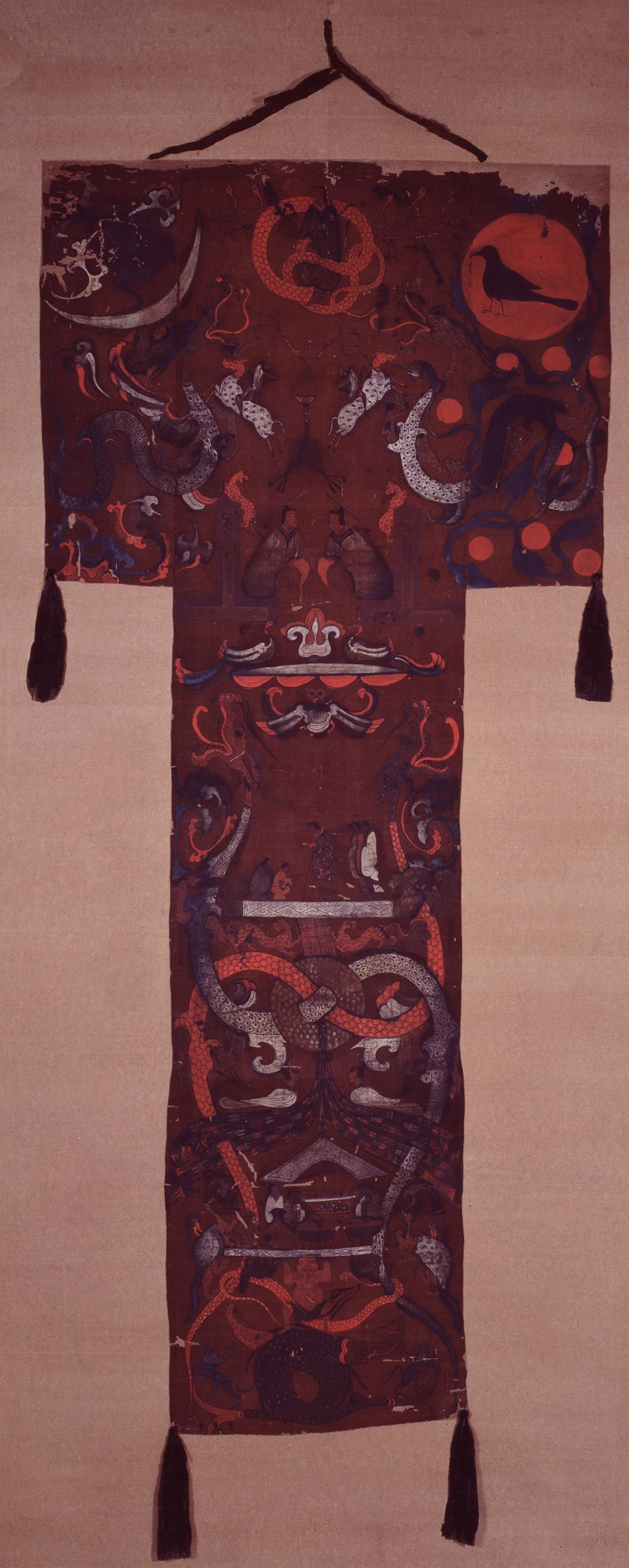
Changsha is the city Chinese food people fly in for: stinky tofu fried black and stuffed with chili, crayfish eaten in gloves, rice noodles for breakfast and pork with fresh chili for dinner. But the reason it earns two days rather than one is the Hunan Museum — the Mawangdui Han tombs, 2,000 years old, with Lady Xin Zhui and the silk funeral banner from her burial. Day one is the museum and the river; day two is the mountain and the food streets.
At a glance
- Day 1Hunan Museum → Orange Isle → Pozi Street and Taiping Old Street
- Day 2Yuelu Mountain → Yuelu Academy → Aiwan Pavilion → Taiping Old Street
Day 1
Mawangdui and the river
Hunan Museum → Orange Isle → Pozi Street and Taiping Old Street
Start at the Hunan Museum, the reason Changsha earns two days: the Mawangdui exhibition holds Lady Xin Zhui's tomb goods, with the silk funeral banner from her burial at the heart of it. The museum is free but needs a reservation — book on its website or WeChat account before you go, because walk-up slots are unreliable on weekends, and it is closed on Mondays. In the afternoon take the metro to Orange Isle, a park on an island in the Xiang River under one of the country's biggest statues of a young Mao Zedong. End where the evening belongs: Pozi Street and Taiping Old Street sit side by side, and the food is stinky tofu, sugar-oil baba and a bowl of Changsha rice noodles.
 Day 2
Day 2
Yuelu Mountain and the old streets
Yuelu Mountain → Yuelu Academy → Aiwan Pavilion → Taiping Old Street
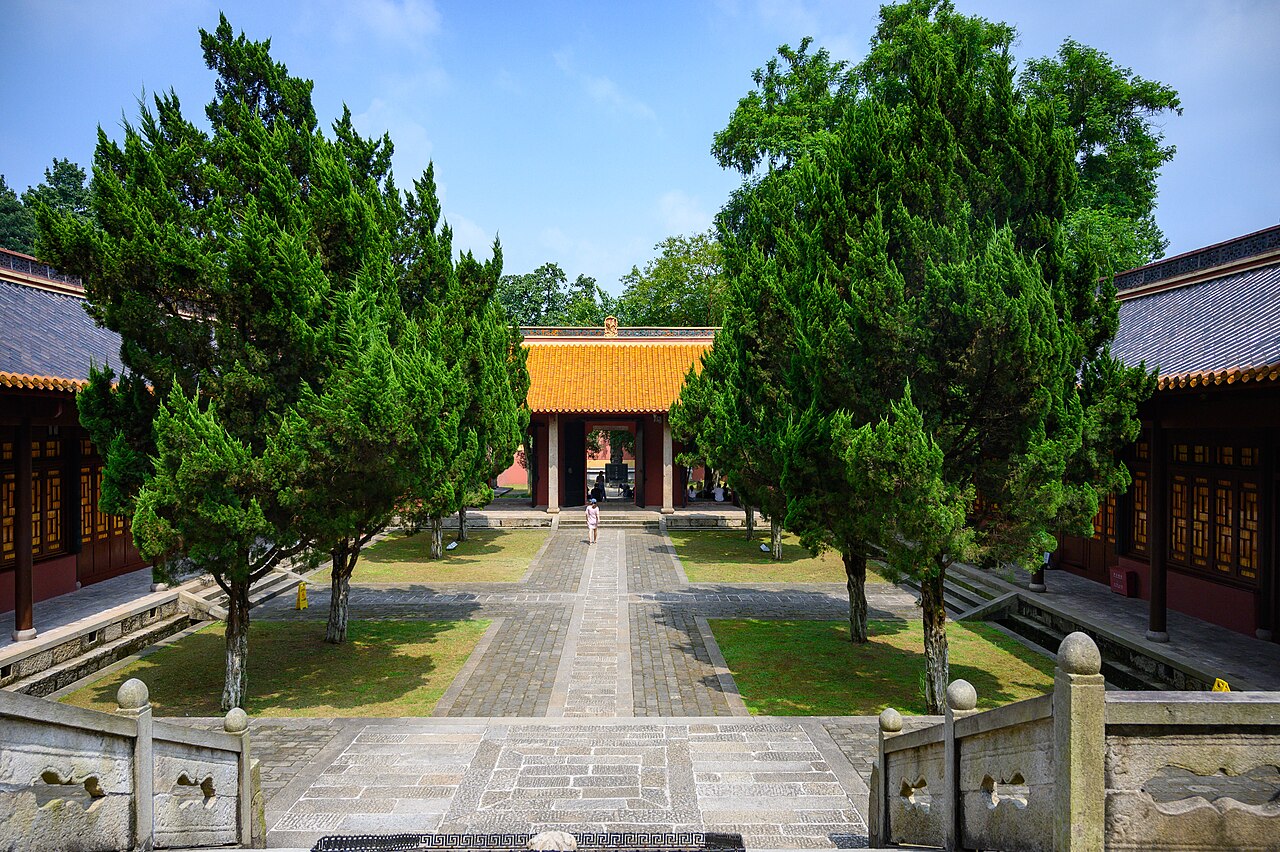
Yuelu Mountain is a half-day of walking at the west edge of town, with free paths up the hillside. The Yuelu Academy at the foot has taught since AD 976, and the Aiwan Pavilion halfway up is where the maple leaves turn in late November; in April the azaleas — the city flower — bloom along the same slopes. The metro reaches the foot of the mountain. Come down in the afternoon and walk the old streets, then do dinner properly: steamed fish head with chopped chili, pork stir-fried with fresh chili, and, if it is summer, kouwei xia — the spicy crayfish that is the late-night ritual.
Eat like you mean it
- Changsha stinky tofuBlack, deep-fried, stuffed with chili and garlic — the food-street classic.
- Sugar-oil babaSweet fried glutinous-rice cakes, the classic street dessert.
- Kouwei xia (spicy crayfish)The late-night summer ritual, eaten with gloves.
- Steamed fish head with chopped chiliHunan's signature banquet dish.
- Changsha rice noodlesThe local breakfast bowl — flat noodles in broth.
- Pork stir-fried with fresh chiliThe home-style dish every Hunanese judges a cook by.
Where to stay
- Wuyi SquareThe centre of town, where the airport taxi drops you; the food streets are a short walk away.
- Xiang River waterfrontRiver views near Orange Isle, with the metro straight to the museum and the mountain.
- Near Changsha South stationFor an early train or a late flight — the maglev to the airport and Metro Lines 2 and 4 into town both leave from here.
Before you go
- Reserve the Hunan Museum's free ticket in advance and do not plan it for a Monday — it is closed, and weekend slots go fast.
- 'Not spicy' (不辣) still arrives spicy. Ask for 微辣 (wēilà, mild) if you cannot take heat.
- July and August are furnace season, with average highs near 35°C. Sightsee early morning and late evening only; autumn is the driest and most comfortable window.
- From the airport: the maglev is about ¥20 and 15 minutes to Changsha South, then Metro Line 2 or 4 into town; Metro Line 6 runs direct from the terminals to the centre in about an hour.
- Connecting straight to a high-speed train? Take the maglev to Changsha South and you never need to enter the city.
- Metro gates take the Alipay transport mini-app — no card or ticket needed.
- Changsha Huanghua is a 240-hour (10-day) transit visa-free port under the National Immigration Administration's policy covering Hunan. You need an onward ticket to a third country or region within the ten days.
One honest thing — Book the Hunan Museum's free ticket in advance and do not plan it for a Monday — it closes, and weekend slots go fast. And remember that 'not spicy' (不辣) still arrives spicy: ask for 微辣 (mild) if you cannot take heat.