Haikou CITY BOARD

Haikou 海口

Hainan's real capital: Nanyang arcades and old-teahouse mornings, a volcano at the city's edge — and a 30-day visa-free policy all its own.

Introduction

Sanya gets the resorts; Haikou gets the island's life. This was the port from which Hainanese left for Southeast Asia — and to which they returned with money and architecture: the largest qilou arcade quarter in China, all Nanyang baroque facades over ground-floor shops, still lived-in and still free to wander. Around it runs a slower city of 老爸茶 teahouses, night markets and beaches that are the citizens' backyard rather than a resort strip. A dormant volcano rises at the city's western edge, and on the coast west of town stands the largest duty-free shopping complex on earth. For foreign visitors Haikou has one more ace: Hainan's own 30-day visa-free policy for 59 nationalities — easier than the mainland's rules, with one important catch: it covers the island only, and you must fly directly into a Hainan port.

Travel highlights

China's easiest entry: 59 nations, 30 days, no visa

Hainan runs its own visa-free scheme: ordinary passports from 59 countries enter for 30 days for tourism, business, family visits, medical care, expos or sports — no consulate, no fee. Two rules decide whether it works for you: you must fly directly into a Hainan port (Meilan included), and the stay is the island only — no onward travel to the mainland without a visa.

The old town is free, and still alive

The qilou quarter around Zhongshan Road and Shuixiangkou is not a reconstructed tourist street — it is a working neighborhood of arcaded shophouses, 老爸茶 teahouses and snack stalls that peaks at breakfast and again after dark. The clock tower by the river is a five-minute walk away.

A volcano you can climb before lunch

Forty Quaternary cones sit at the city's western edge in the Leiqiong geopark (¥40–45). Stone steps climb through lava forest to the Ma'anling crater rim — on a clear day you can see the Qiongzhou Strait. Two to three hours round trip from downtown; go early, it is hot by noon.

Duty-free on a scale that needs a map

The cdf Haikou International Duty-Free City is the world's largest single duty-free complex — and the rules matter: duty-free is for people leaving the island, so shop on your last day with your passport and departure ticket in hand. Island residents and mainland tourists have their own quotas; foreign visitors buy under the departure rules.

Travel alerts

Top attractions

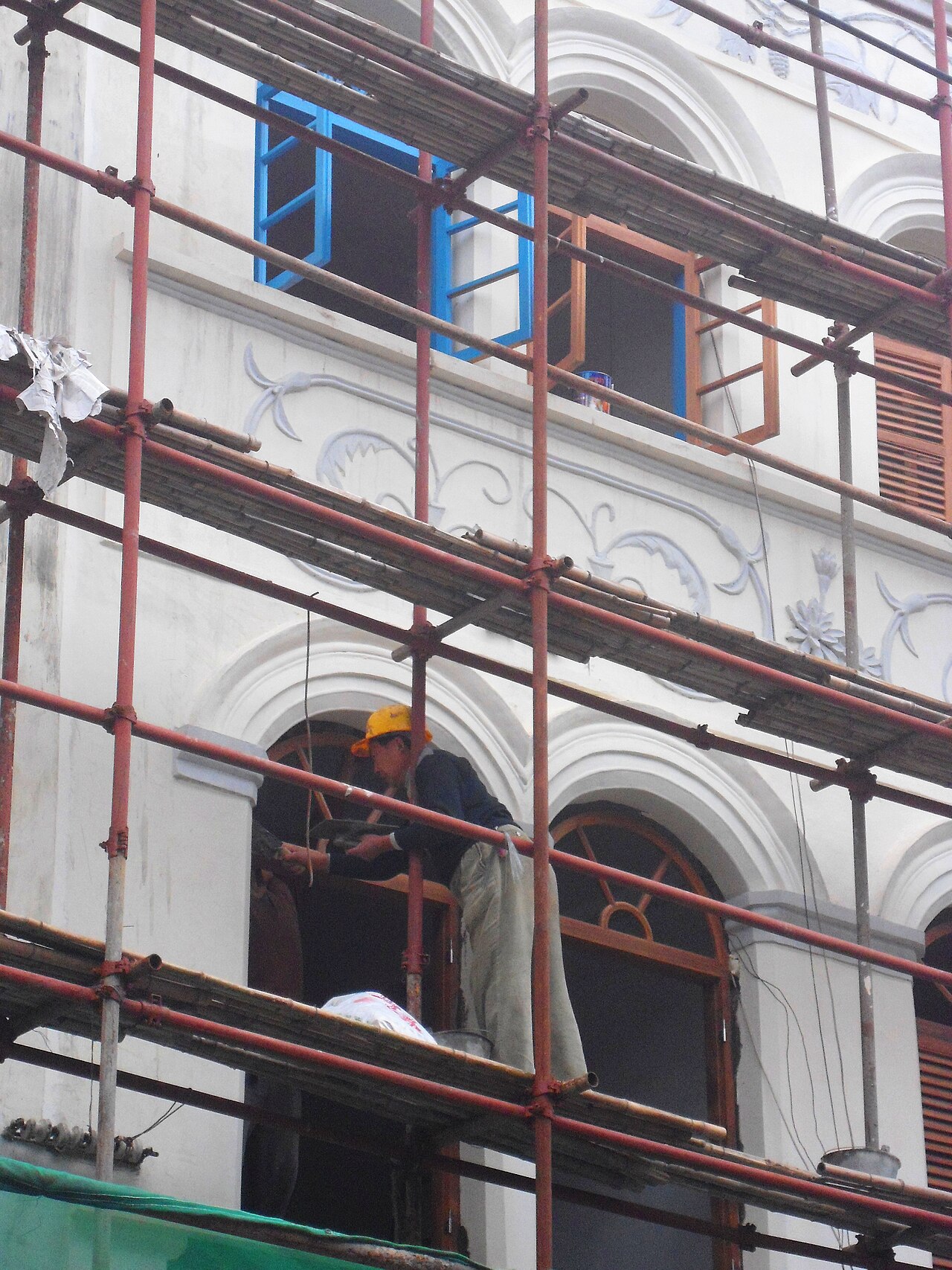
A century-old white qilou facade with arched balconies, wrapped in restoration scaffolding on the old street.

Qilou Old Street

The largest surviving qilou (arcade-house) quarter in China — a century of Nanyang baroque built by returned overseas Hainanese, still humming as a neighborhood. The best lanes are Zhongshan Road and Shuixiangkou; come hungry in the morning for 辣汤饭 and Hainan noodles, and look up — the facades are the exhibit. Free, open around the clock, and five minutes from the riverside clock tower.

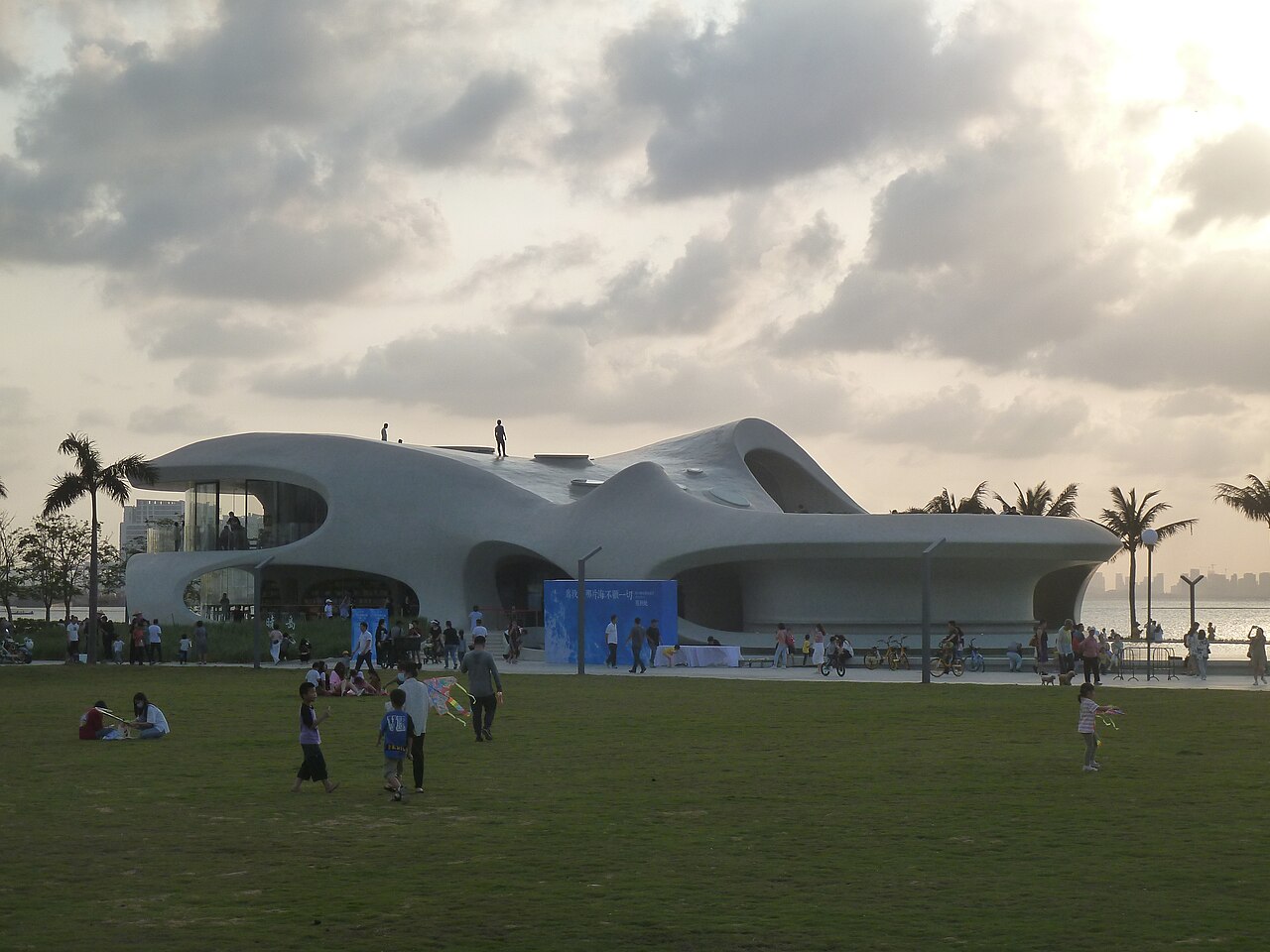
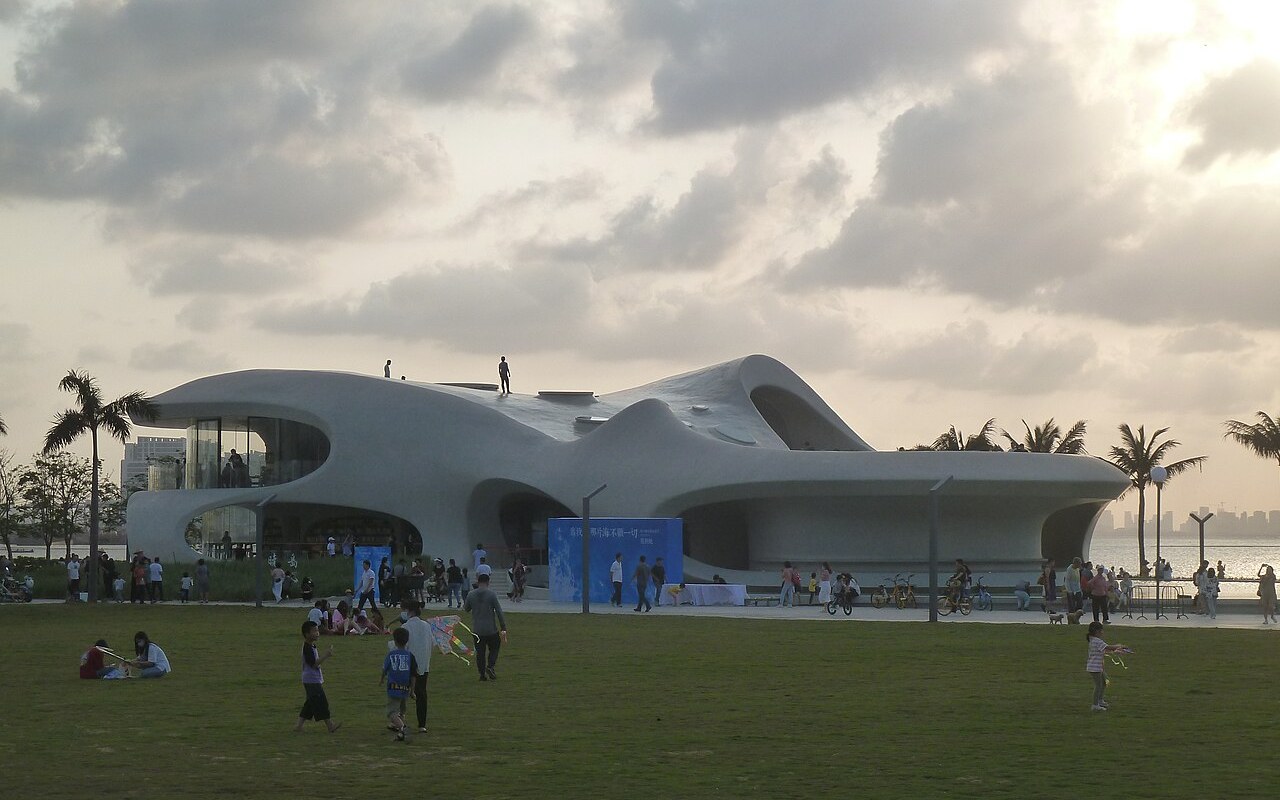
The white cave-like Cloud Cave Library by the sea, visitors scattered on the lawn under a cloudy sky.

Cloud Cave (Wormhole) Library

The white, cave-like library by MAD Architects on the west-coast promenade — Haikou's most photographed room, all curves and light wells facing the sea. Entry is free but requires an online reservation (book a day ahead on weekends). Even without a slot, the outside at sunset is the city's best photo stop; come an hour before sundown.

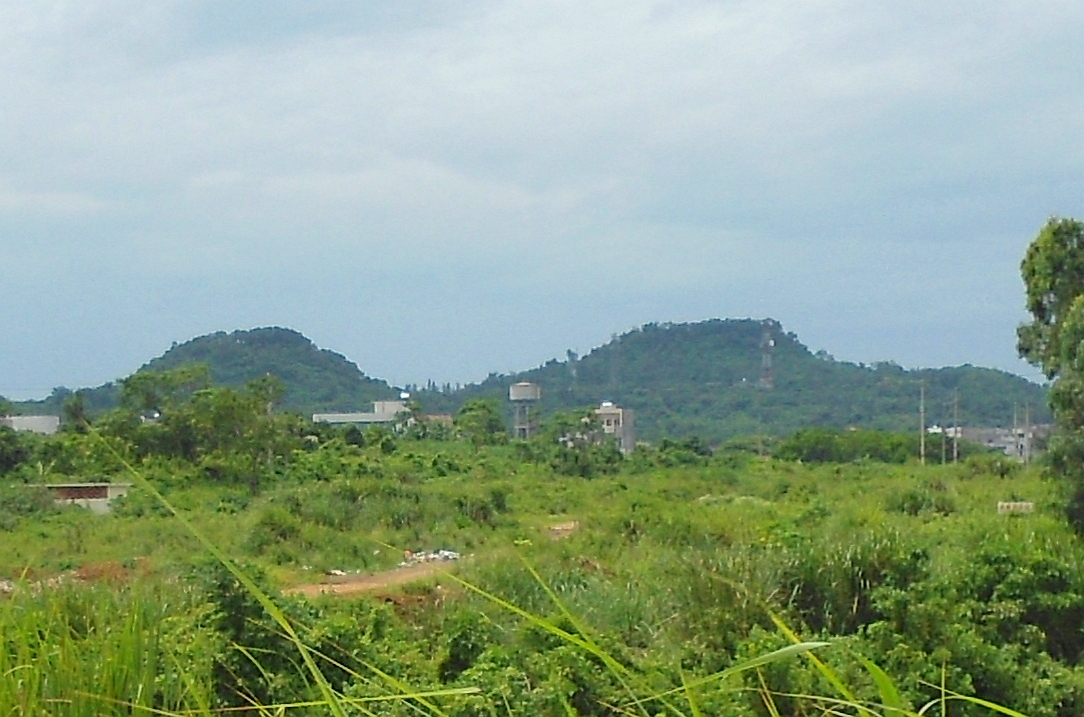
Forest-covered volcanic cones rising over lava fields at the Leiqiong geopark.

Leiqiong Volcanic Geopark

Forty dormant volcanoes at the city's edge. The main trail climbs through lava-rock forest to the rim of the Ma'anling crater — the strait on the horizon on clear days — then drops into the bowl itself. Tickets ¥40–45; allow two to three hours with the steps, and start early before the heat. 30–40 minutes west of downtown by taxi.

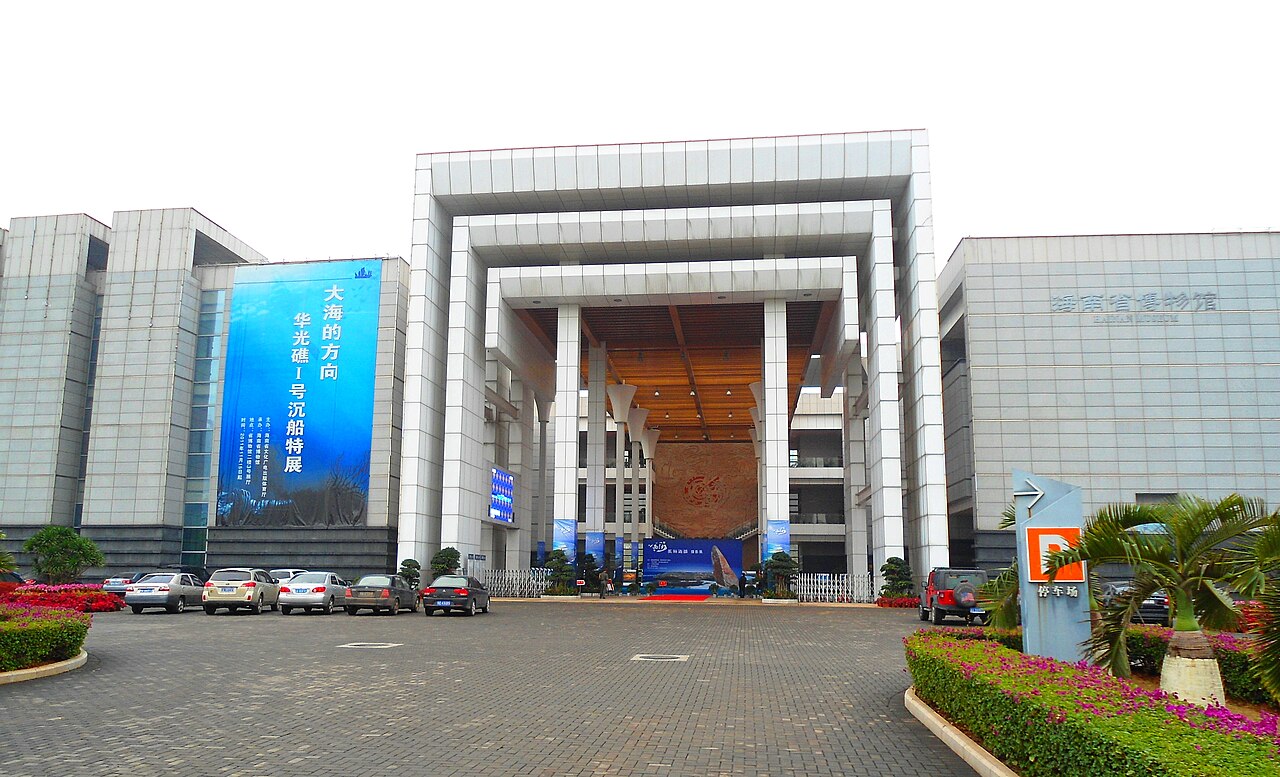
The entrance facade of Hainan Provincial Museum, its name in gold above the glass doors.

Hainan Provincial Museum

The island's whole story in one free, well-lit building: the South China Sea trade and the Huaguangjiao shipwreck, Li and Miao minority cultures, and the prized huanghuali and agarwood collections. Allow two hours — it is the best preparation for everything else on the island. Free; closed Mondays.

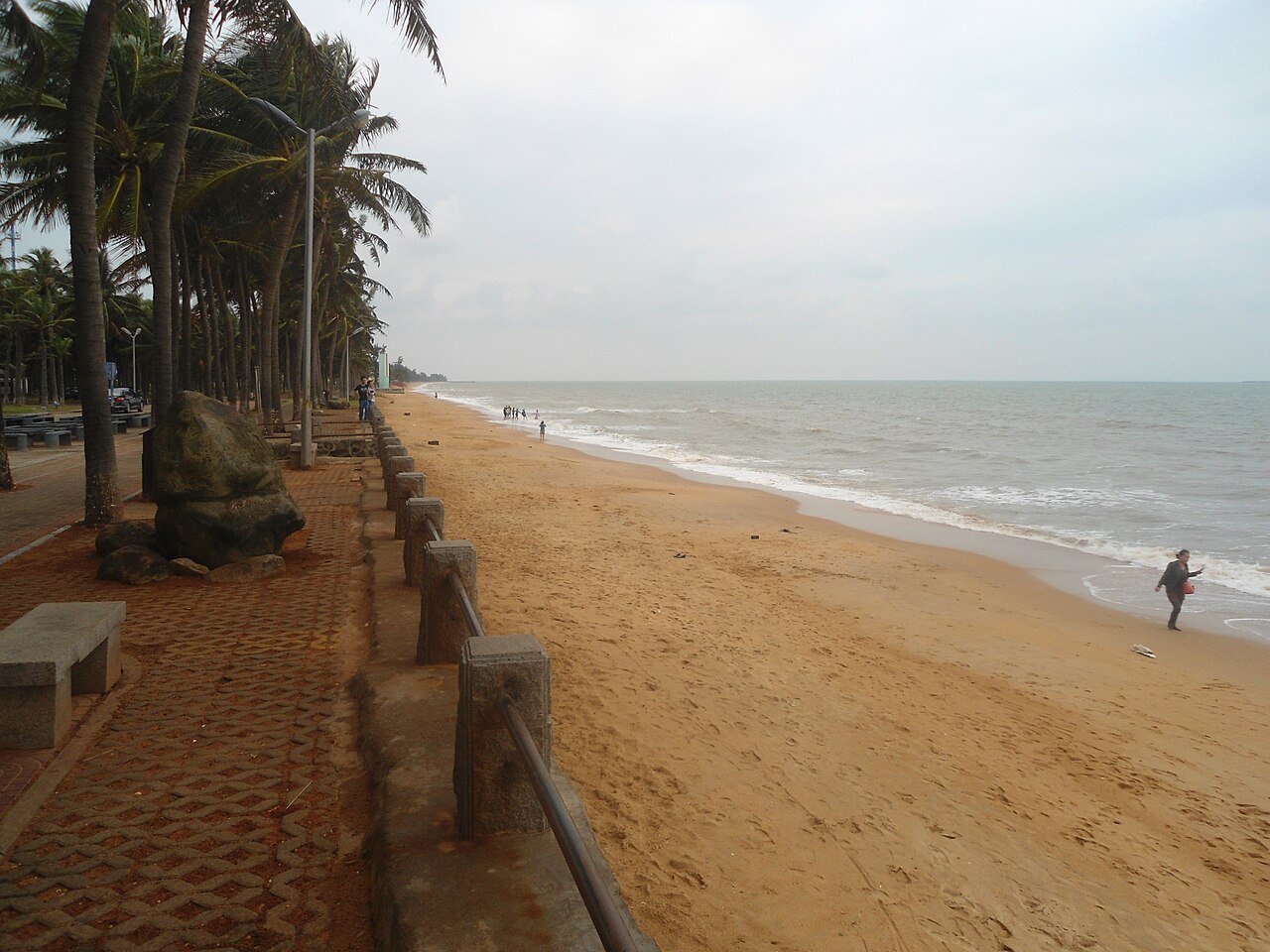
Palm trees lining the golden sand of Holiday Beach, a lone walker by the calm sea.

Holiday Beach & Wanlv Park

Haikou's backyard shoreline: six kilometres of free public beach at Holiday Beach, and the city's huge seafront lawn at Wanlv Park for an evening ride. The water is calm, the sand golden, and sunset is the whole point — this is where locals bring kids, kites and barbecue, not where resorts keep guests. Free.

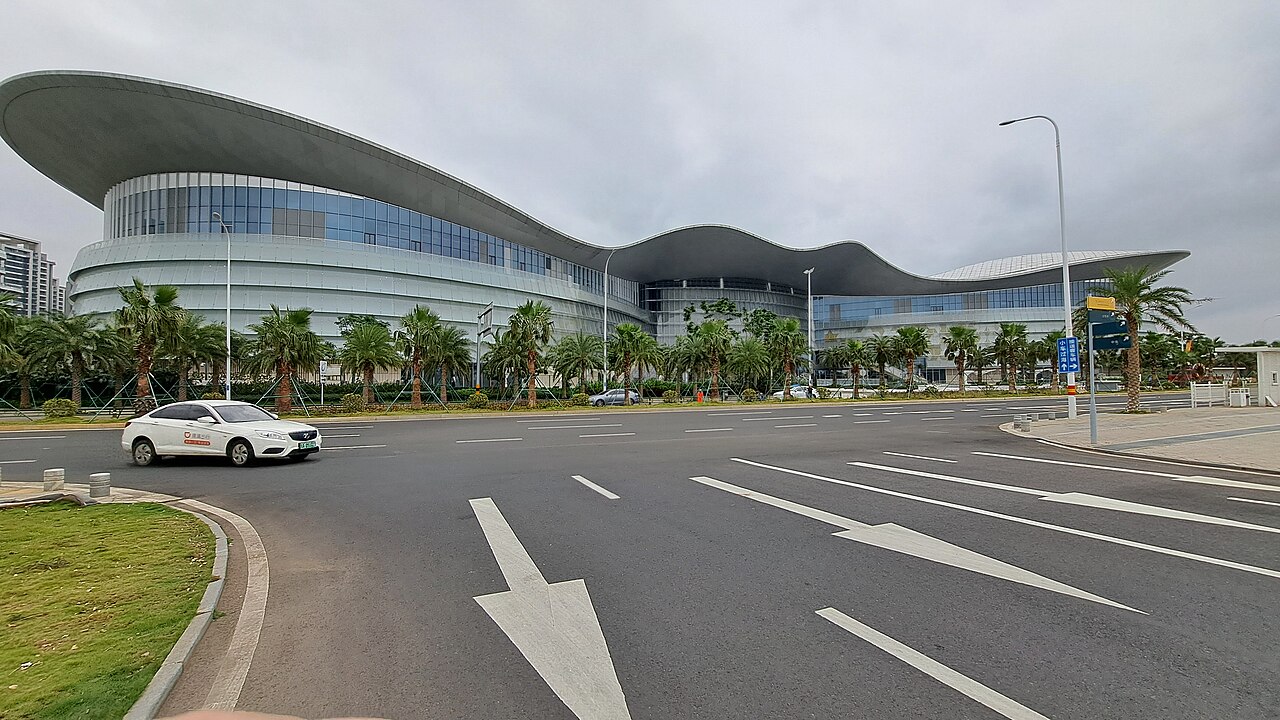
The sweeping wave-shaped roof of Haikou International Duty-Free City above its approach road.

Haikou International Duty-Free City

The world's largest duty-free complex, a wave-roofed mall on the west coast — worth a visit even as architecture. The catch: duty-free prices apply only when you are leaving the island, so make it your last-day stop and bring your passport and departure ticket (flight or ship). West-coast location, about 40 minutes from the old town.

Local cuisine

Where to stay

Haikou has no metro, so pick your base by what you will do most: old town for food and evenings, west coast for beach and the duty-free run. Foreign-passport check-in is routine at the chains. Watch the calendar: Golden Week (early October) and Spring Festival roughly double coastal rates, while ordinary winter weekends are the island's best-value season.

Getting around

Getting here

  • Haikou Meilan Airport (HAK)

    The island's northern gateway, with flights across China and regional international links. The airport has its own high-speed station — Meilan — underneath: you can land and be on a train toward Sanya within the hour.

  • Island-loop high-speed rail

    The ring line ties the island together: Haikou to Sanya in about 1.5–2 hours, with stops at Wenchang, Qionghai (Bo'ao) and Wanning along the east coast. 12306 accepts foreign passports.

  • From the mainland

    Through trains from Guangzhou and beyond cross the Qiongzhou Strait by rail ferry — slow, cheap and an experience in itself — while most visitors simply fly.

Mind the station names: 美兰 is the airport station, 海口东 the main east-coast HSR station, and 海口站 the old station by the port. If you are using the 59-nation visa-free policy, remember you must arrive directly at a Hainan port — connecting through a mainland airport first disqualifies the trip.

Local transport

  • 🚕

    DiDi & taxi

    There is no metro in Haikou — DiDi and taxis are the backbone, cheap by any standard. Most in-town rides run ¥10–25; the volcano or the duty-free city is ¥40–60.

  • 🚌

    Bus

    Dense and a yuan or two a ride, but routes are Chinese-only. Useful for the beach strip; less useful for the volcano, where a taxi saves an hour.

  • 🛵

    Shared bikes & e-scooters

    Flat, warm and made for wheels — the old town and the seafront promenade are ideal by shared bike. Rent an e-scooter only if you are confident with local traffic rules (helmet, and some roads restrict them).

Distances are short but the heat is real: plan outdoor sights for morning and late afternoon, and let the middle of the day belong to museums, teahouses and malls. For the volcano and the duty-free city, just take a car — the bus detours cost more time than they save yuan.

What's on

Recommended routes

All routes →

FAQs

Haikou or Sanya?

They are different trips. Sanya is the resort strip; Haikou is the island's lived-in capital — cheaper, quieter, and the better place to eat and understand Hainan. Most travelers do both: Haikou for a day or two, then the 90-minute train south.

How does the 59-nation visa-free actually work?

Fly directly into any Hainan port with an ordinary passport from one of the 59 countries, and you get 30 days for tourism, business, family visits, medical care, expos or sports — no consulate visit. The two catches: entry must be direct into Hainan, and you cannot continue to the mainland on it.

Is the volcano worth half a day?

Yes if you like your geology walkable — it is the rare volcanic field you can circle on a crater rim within city limits. Go early (it bakes by noon), bring water, and expect steps rather than wilderness.

How does duty-free shopping work for foreign visitors?

Duty-free prices apply when you are departing the island: shop with your passport and a confirmed departure ticket, and collect or carry per the store's rules. Buy on your last day — the discount exists because the goods leave Hainan with you.

What should I eat first?

A teahouse breakfast: 海南粉, pineapple buns and a pot of tea at a 老爸茶 house — it is the fastest way into the city's rhythm. Then Wenchang chicken for lunch and qingbuliang whenever the heat wins.

Two days enough?

For the city, yes: old town and museum on day one, volcano and coast on day two, duty-free on the way out. Add a third if you want the beach to be the point rather than the backdrop — or if a typhoon steals a day.

When is typhoon season?

The risk window is roughly July to October, peaking in August–September. Outside it, Haikou is an easy year-round destination — November to April is the dry, gentle season northerners migrate for.